 Tooth Calendar Blog
Is Fluoride Safe for Kids? Toothpaste Amounts and the Latest News
Used at the right strength and amount, fluoride toothpaste is a proven way to prevent cavities. What the recent US fluoride news means, how much to use, and safety tips.
At a glance
- A rice-grain smear under 3, a pea-sized amount from age 3
- No evidence the right amount of toothpaste affects IQ
- Fluoride drops or tablets only after a risk assessment
Lately, lots of parents have seen news that fluoride may affect children's IQ, and they're wondering whether fluoride toothpaste is still okay. Here's what the news actually says, and what to keep in mind to use fluoride safely for your child.
How fluoride protects teeth, and what the news says
Fluoride is one of the most important ways to prevent cavities. Every time your child eats something sweet, acid made by bacteria dissolves a little of the tooth surface, and then saliva helps it harden again, over and over. Fluoride helps with that repair and makes the tooth surface more resistant to acid. That's why fluoride can even stop an early cavity that has turned white from getting worse.
The recent news that worried parents came mostly from the US.
- In 2024, the US National Toxicology Program (NTP) reported that high fluoride exposure, above 1.5 mg per liter of water, is linked to lower IQ in children. It also said there wasn't enough data to judge the effect of the US recommended water level (0.7 mg per liter).
- In 2025, the US Food and Drug Administration (FDA) recommended that swallowed fluoride supplements (drops and tablets) not be used for children under 3, or for children who aren't at high risk of cavities. This doesn't apply to fluoride toothpaste, fluoride applied at the dentist, or community water fluoridation.
- The American Dental Association (ADA) and the American Academy of Pediatric Dentistry (AAPD) opposed the FDA action, saying supplements help children at high risk of cavities. They're keeping their guidance to prescribe only after a risk assessment.
- In 2025, policy changes kept coming, including some US states banning community water fluoridation by law.
In short, the concerns are about high levels in drinking water and swallowed supplements. The AAPD says there's no evidence linking the US water fluoride level to lower IQ. And no evidence has been found that using toothpaste in the recommended amount affects IQ.
Fluoride toothpaste: the right strength and the right amount
- Brush twice a day with fluoride toothpaste, starting with the very first tooth.
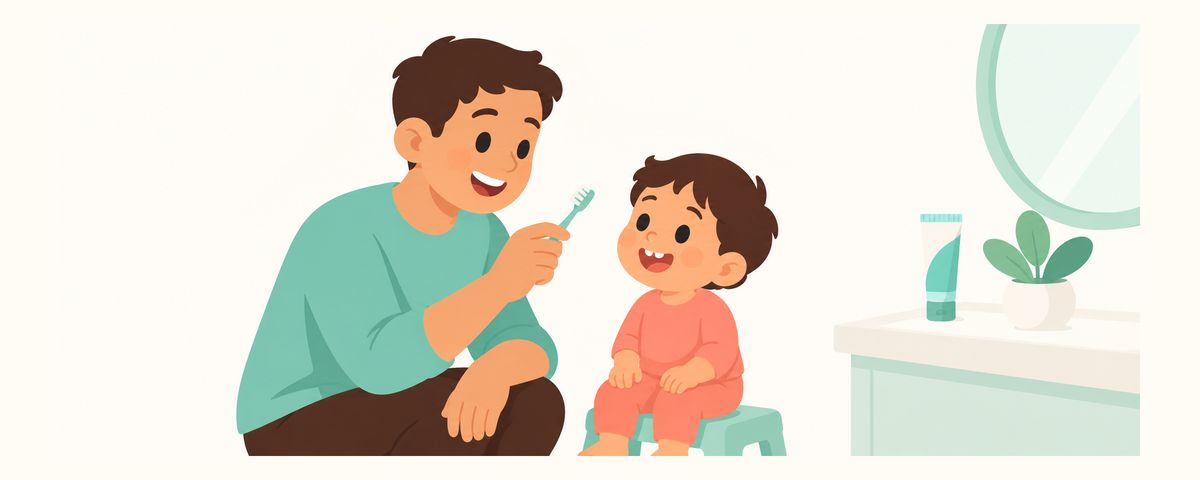
- Under age 3, use a rice-grain smear, just a thin layer on the bristles.
- From age 3, use a pea-sized amount.
- Put the toothpaste on the brush yourself, and keep the tube out of your child's reach.
- After brushing, have your child spit, and don't rinse with lots of water. The fluoride left in the mouth helps protect the teeth.
When choosing a toothpaste, check the fluoride content (ppm) on the box. Guidelines in many countries recommend toothpaste with at least 1000 ppm fluoride, though the details by age differ a little from country to country. Regular household fluoride toothpaste is usually 1000 to 1500 ppm. Both the strength and the amount matter, so today's recommendation is to use a regular-strength toothpaste and adjust the amount to your child's age. Fluoride-free toothpaste can't give you fluoride's cavity protection.
Dental fluorosis, which shows up as white spots or streaks on the front teeth, is most likely to develop at 15–30 months, while the permanent front teeth are forming. Most cases are mild, but sticking to the right amount of toothpaste matters most at this age. If your child loves the taste and tries to squeeze it out and eat it, that's all the more reason for you to keep it and dispense it.
Frequently asked questions
My child can't spit yet and swallows the toothpaste.
If your child happens to swallow a little while using the recommended amount, it's usually nothing to worry about. But if they often swallow a lot, use less toothpaste and practice spitting little by little.
Isn't low-fluoride kids' toothpaste safer?
If the strength is too low, the cavity protection can drop too. Guidelines in many countries recommend at least 1000 ppm in the right amount, though the details by age differ a little from country to country. Talk with your dentist about the right strength and amount for your child.
Is fluoride varnish at the dentist safe?
The dentist applies a set amount to the tooth surface, and it isn't covered by the recent US FDA recommendation. It's best to get it at an interval based on your child's cavity risk.
Should I give a separate fluoride supplement?
Swallowed fluoride is used only after a risk assessment. Ask your dentist or pediatrician whether your child needs it, and don't give it on your own.
Talk with your dentist if
- You see white spots or streaks on the front teeth
- You're not sure what strength of toothpaste to use or how much
- Someone has recommended swallowed fluoride, or your child is taking it
- Your child often squeezes out and eats toothpaste or seems to swallow a lot
- The fluoride news makes you want to stop using fluoride
English ebook · Dentist Ingyoon An
A guide to the decisions behind dental care
Tooth Calendar follows dental care from pregnancy to eighteen in 78 chapters. Explore the reasons behind feeding, brushing, baby-tooth decay, sedation, and injury decisions—including what can be watched and when to seek help. Age-based contents and a topic index help you find the concern you have today.
Get these at the right time
Enter your child's birth date (or due date) in the Tooth Calendar app and these articles arrive as reminders when they matter. Free, no sign-up.
Sources
- NTP · Fluoride: Potential Developmental Neurotoxicity (Monograph 08) (2024)
- FDA · Ingestible Fluoride Drug Products (2025)
- AAPD · Statement on Recent FDA Announcement to Fluoride Supplements (2025)
- AAPD · Fluoride Therapy (2023)
The information in this article is for general educational purposes and does not replace professional dental care. Talk to a dentist about your child's condition.