 Tooth Calendar Blog
First Birthday Oral Health Checklist: Bottle, Brushing, and Fluoride Varnish
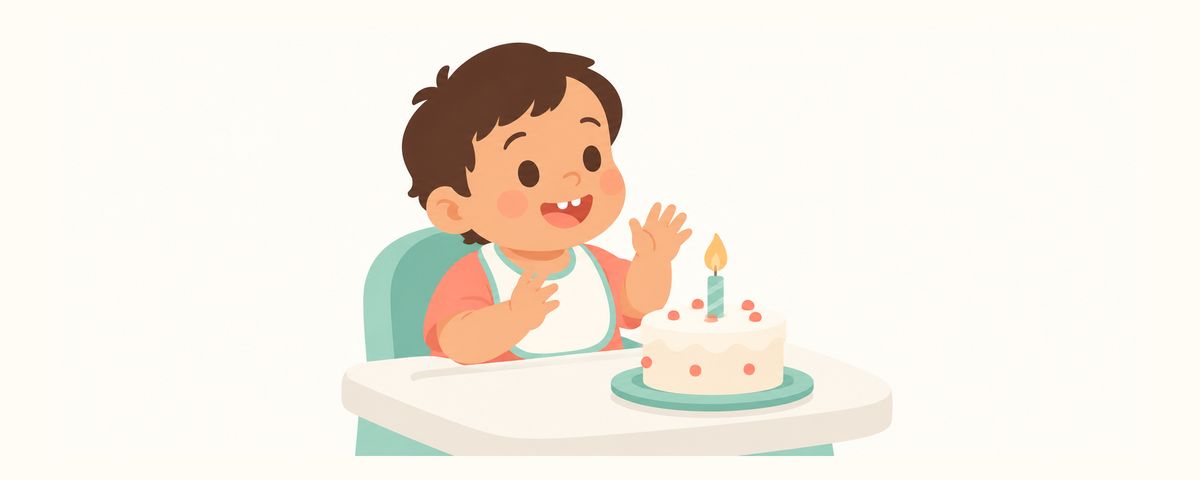
The first birthday is a great time to check in on habits: weaning from the bottle, brushing twice a day, starting fluoride varnish if you haven't yet, snacks, and night feeds.
At a glance
- Wean from the bottle: fully on cups by 18 months at the latest
- Brush twice a day, morning and bedtime, with a rice-grain smear
- No fluoride varnish yet? Start now, every 3 to 6 months
Happy first birthday! Around now, your baby has several teeth, and eating and drinking start to look more like yours. That also means the teeth come into contact with sweet foods and drinks more often. The habits you build now shape the health of all 20 baby teeth, so use this milestone to check in on them one by one.
What's changing in the mouth around age one
By the first birthday, several upper and lower front teeth are usually in, and the first molars are up next. Molars have grooves on their chewing surfaces where food easily gets stuck, so brushing takes more care than when there were only front teeth.
Eating changes too. As baby food turns into toddler meals and snacks begin, something goes into the mouth more often. Cavities depend on both how much and how often your child eats sweet foods, and how often matters especially. Every time your child eats, mouth bacteria make acid, and saliva needs time to wash that acid away and help the teeth recover. So when snacks and drinks are nibbled and sipped all day long, the teeth never get a break.
It's also time to take another look at the bottle and night feeds. Falling asleep with a bottle or feeding often through the night is a major cause of cavities on the upper front teeth.
And fluoride varnish at the dentist isn't something you have to wait until the first birthday for. Once teeth come in, it can be started depending on cavity risk. If your child hasn't had it yet, start at this first-birthday checkup. The dentist paints a thin layer of fluoride on the teeth, which helps strengthen them and prevent cavities. It only takes a moment and doesn't hurt.
Here's your one-year checklist
- Wean from the bottle. Swap daytime bottles for cups first, and be fully on cups by 18 months at the latest.
- Brush for your child twice a day, morning and before bed. The most important brushing of the day is before bed.
- Use a rice-grain smear of fluoride toothpaste. This amount is fine even if your child can't spit yet.
- If you haven't yet, start professional fluoride varnish at the dentist, and repeat it every 3 to 6 months, depending on cavity risk.
- Offer snacks only at set times, and drinks other than water only with meals.
- Cut back on night feeds little by little, and always clean the teeth afterward.
This is also the age when many babies start fighting the toothbrush. If your child wants to hold the toothbrush, hand over a second one. While they play with theirs, you brush with the other. It goes so much more smoothly. Laying your child on your lap with the head toward your tummy lets you see inside the mouth and keeps the head steady.
Brushing at the same time and in the same order every day helps too. If you sing a short song and brush until it ends, your child knows when it'll be over and fights less.
Even if your child insists on brushing alone, you still need to finish the job. At this age, kids mostly chew on the brush or rub the front teeth, so the molars and the areas near the gums don't get cleaned. Let your child go first, then say "Now it's my turn!" and brush again.
Here are some common mistakes around the first birthday.
- Still giving milk only in a bottle after the first birthday
- Offering fruit juice or sweet drinks in a cup as often as water
- Handing over a cracker whenever your child asks
United States guidance
US: Community water fluoridation and supplements
Many US community water systems adjust fluoride to a recommended level. If your home uses well water or your community water is not fluoridated, ask at the first dental or pediatric visit whether fluoride supplements are appropriate. The decision depends on the fluoride level of your water and your child's cavity risk.
Frequently asked questions
Does fluoride varnish hurt?
No. It's painted onto the teeth with a small brush, so it's over quickly. Afterward, follow the dentist's instructions on when your child can eat and brush.
Is it still okay if my child swallows fluoride toothpaste?
If your child swallows a little of a rice-grain smear while brushing, it usually isn't a concern. Sticking to that amount matters, so squeeze it out yourself and keep the tube out of your child's reach.
How many snacks a day is best?
Set times matter more than a set number. Plan meal and snack times, and offer only water in between.
My child only has a few teeth so far. Is that okay?
When teeth come in varies a lot from child to child. But if there are still no teeth at all after the first birthday, have a dentist take a look.
When to see a dentist
- You haven't had the first dental visit yet
- No teeth have come in after the first birthday
- You notice discoloration on a tooth, like a white band or brown spot
- The gums keep bleeding every time you brush
- Your child hasn't had fluoride varnish yet, or you'd like advice on how often
English ebook · Dentist Ingyoon An
A guide to the decisions behind dental care
Tooth Calendar follows dental care from pregnancy to eighteen in 78 chapters. Explore the reasons behind feeding, brushing, baby-tooth decay, sedation, and injury decisions—including what can be watched and when to seek help. Age-based contents and a topic index help you find the concern you have today.
Get these at the right time
Enter your child's birth date (or due date) in the Tooth Calendar app and these articles arrive as reminders when they matter. Free, no sign-up.
Sources
The information in this article is for general educational purposes and does not replace professional dental care. Talk to a dentist about your child's condition.