 Tooth Calendar Blog
Pea-Sized Fluoride Toothpaste from Age 3: Learning to Spit and Quitting the Pacifier
From age 3, fluoride toothpaste goes from a rice-grain smear to a pea-sized amount. Why, how to spit and skip the big rinse, and how to end pacifier habits.
At a glance
- From age 3, a pea-size amount of toothpaste, twice a day
- Spit it out after brushing, and skip the big rinse
- Time to wrap up pacifiers and thumb-sucking
At the third birthday, brushing changes a little. The toothpaste amount goes up, and your child is old enough to learn to spit. It's also a good time to start wrapping up pacifier or thumb-sucking habits. Here's what changes around age three, for both brushing and mouth habits.
What changes at age three
From the third birthday, fluoride toothpaste goes from a rice-grain smear to a pea-sized amount. By now, all 20 baby teeth are in, so there are more surfaces to clean, and your child can learn to spit out the toothpaste. That's why a little more fluoride is used to protect the teeth.
There's a reason the amount is set. Fluoride hardens the outer layer of the teeth and prevents cavities, but swallowing lots of toothpaste while the permanent teeth are forming can leave white marks on them (dental fluorosis). So what matters isn't "a lot," but "the right amount."
With toothpaste, both the strength and the amount matter. When choosing one, check the fluoride level. Regular household fluoride toothpaste is usually 1000 to 1500 ppm. Many children's toothpastes contain less fluoride than this, so take a look at the label. 1350 to 1500 ppm (often 1450 ppm) isn't a special toothpaste just for high-risk kids. It's within the regular range. Some countries, like the UK, recommend this strength for children aged 7 and up or those at high cavity risk. It's different from high-strength prescription toothpaste. Talk with your dentist about the right strength for your child, based on age and cavity risk.
It's also time to look at mouth habits. When pacifiers or thumb-sucking continue past age 3, the front teeth can be pushed forward, or a gap can form so the upper and lower front teeth don't meet. The good news is that if the habit stops now, the teeth often move back into place.
Pea-sized, then spit
- Squeeze out the toothpaste yourself. When kids do it, it's easy to use too much. Keep the tube out of your child's reach.
- Brush twice a day with a pea-sized amount. Brush in the morning and before bed. Your child brushes first, and you finish.
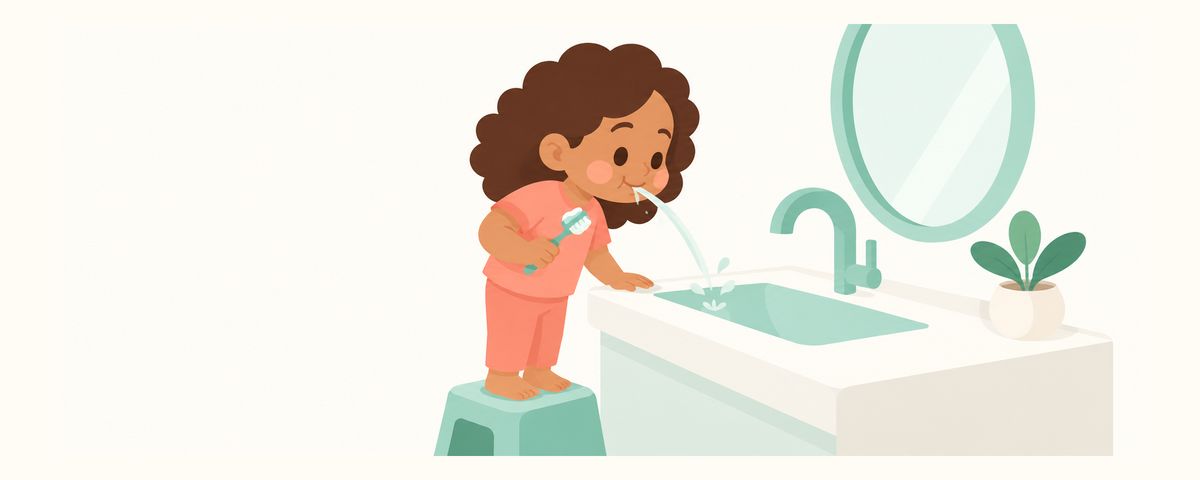
- After brushing, have your child spit. It's fine if spitting doesn't go well at first. At the sink, show your child how to spit, making it a game.
- Don't rinse with lots of water. Rinsing again and again washes away the fluoride that should stay on the teeth. It's best to finish with just spitting.
If spitting is hard, practice outside of brushing time. A few rounds of a game where your child holds a little water in the mouth and spits it into the sink, and they'll catch on fast. Here are some common mistakes at this age.
- Handing your child the tube, or squeezing a line as long as the bristles.
- Letting your child suck on the toothbrush because they like the taste.
- Filling a cup with water and rinsing several times after brushing.
Here's how to wrap up pacifier and thumb-sucking habits.
- Pick a day to stop the pacifier for good. Talk about it ahead of time, like "After your birthday, let's say bye-bye to the pacifier," and when the day comes, put it away. A little goodbye ritual with your child can help too.
- Use praise to cut back on thumb-sucking. Notice the good days, like putting a sticker on the calendar for each day without sucking. Noticing the good days works better than scolding.
- Watch when it happens. If your child sucks most when sleepy or bored, offer hands-on play or a bedtime stuffed animal at those times.
Frequently asked questions
My child keeps swallowing the toothpaste. Is that okay?
If your child happens to swallow a little while using the recommended amount, it's usually nothing to worry about. But if they often swallow a lot, it can leave white marks on the permanent teeth, so squeeze out less yourself and keep practicing spitting.
My child says it feels yucky without rinsing.
Try a quick, light rinse with just a tiny bit of water after spitting. Just avoid a mouthful of water and several rinses.
If my child quits the pacifier, will the pushed-out front teeth go back?
If the habit stops now, the teeth often move back into place. If the front teeth still stick out or the lips don't close easily after the habit stops, talk with your dentist.
Can anyone use 1450 ppm toothpaste?
1450 ppm isn't a high-strength prescription toothpaste. It's within the regular range. But the age at which it's recommended differs by country. Some, like the UK, recommend it for children aged 7 and up or those at high cavity risk. Talk with your dentist about the right strength for your child's age and cavity risk, and stick to a pea-sized amount.
Isn't fluoride-free toothpaste safer?
Professional dental organizations recommend fluoride toothpaste as the foundation of cavity prevention. If you're worried about fluoride, the best approach is to stick to the right amount rather than leave it out. Talk with your dentist if you have questions.
When to see a dentist
- Your child is past age three and still can't stop the pacifier or thumb-sucking
- The front teeth stick out or the lips don't close easily
- There's a gap and the upper and lower front teeth don't meet
- Your child's cavity risk is high and you want to decide which toothpaste to use
- You see white marks or brown spots on the teeth
English ebook · Dentist Ingyoon An
A guide to the decisions behind dental care
Tooth Calendar follows dental care from pregnancy to eighteen in 78 chapters. Explore the reasons behind feeding, brushing, baby-tooth decay, sedation, and injury decisions—including what can be watched and when to seek help. Age-based contents and a topic index help you find the concern you have today.
Get these at the right time
Enter your child's birth date (or due date) in the Tooth Calendar app and these articles arrive as reminders when they matter. Free, no sign-up.
Sources
- AAPD · Fluoride Therapy (2023)
- AAPD · Policy on Oral Habits (2022)
The information in this article is for general educational purposes and does not replace professional dental care. Talk to a dentist about your child's condition.