 Tooth Calendar Blog
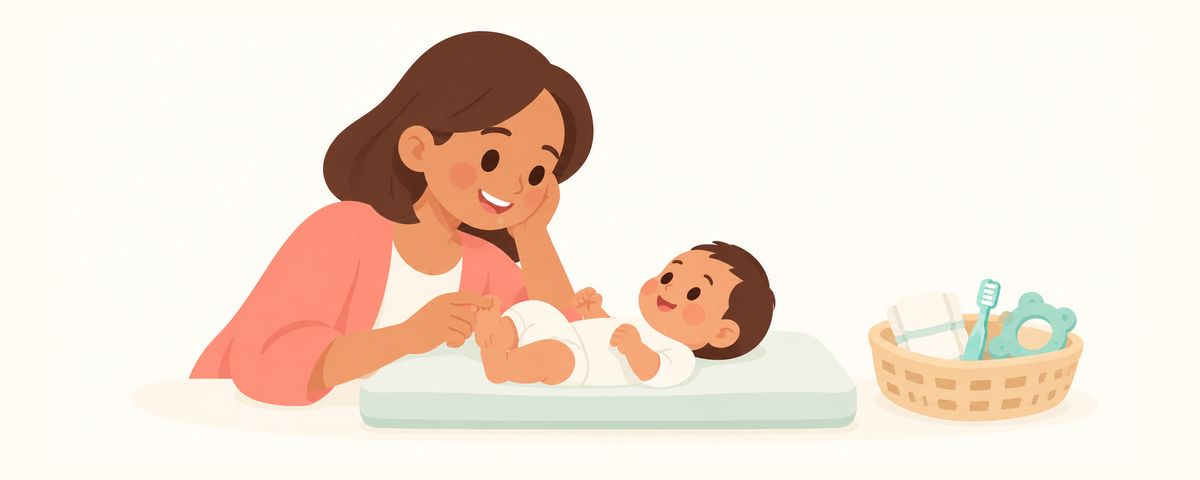
Baby Oral Care Essentials for Your Checklist: Choosing Gauze, Brushes, Toothpaste, Teethers
Gauze, a baby toothbrush, fluoride toothpaste, and a teether are all you need. What to look for, when to use each, and why to skip benzocaine gels and amber.
At a glance
- Gauze, baby toothbrush, toothpaste, teether. That's it
- Pick children's fluoride toothpaste with at least 1000 ppm
- Skip benzocaine gels and amber necklaces
When you're putting together your baby checklist, there are so many baby oral care products that it's hard to know what to buy. In reality, you only need a few things. Here's what's good to have on hand, how to choose, and what not to buy.
You need less than you'd think
Baby oral care is split into before teeth come in and after the first tooth. Thinking about supplies in the same way keeps it simple.
Before teeth come in, all you do is wipe the gums after feeds. This wipes away leftover milk and helps your baby get used to having their mouth touched. One piece of clean gauze is enough.
From the day the first tooth shows up, cavities can form. That's when you need a baby toothbrush and fluoride toothpaste. It's also nice to have a teether for when itchy gums come with teething.
These are the four essentials:
- Clean gauze: For wiping the gums after feeds, even before teeth come in. Dampen it with boiled and cooled water and wrap it around your finger.
- Baby toothbrush: A silicone finger brush or a small-headed baby toothbrush with soft bristles.
- Fluoride toothpaste: Pick a toothpaste in the regular household range of 1000 to 1500 ppm fluoride. Use a rice-grain smear from the day the first tooth comes in.
- Teether: Chill it in the refrigerator, but don't freeze it.
When choosing and using them, just remember this
Check the number on the toothpaste box. Many children's toothpastes contain little or no fluoride. Look for the fluoride content (ppm) on the package and make sure it's in the regular household range (usually 1000 to 1500 ppm). To prevent cavities, professional organizations recommend fluoride toothpaste as the standard. You just use a small amount: a rice-grain smear.
Keep toothpaste out of your child's reach. You put the toothpaste on the brush, and after using it, store it up high.
Choose a toothbrush that fits your baby's mouth. With one or two teeth, a finger brush or gauze is easy to use. As more teeth come in, switch to a small-headed baby toothbrush. There's no need to buy several from the start.
Keep the teether chilled, not frozen. Wash it well and keep it in the refrigerator. The cool feeling soothes the gums. Frozen solid, it's too hard and cold, which isn't good for the gums.
There are also things to take off your checklist. The US FDA has warned against using benzocaine teething gels on the gums of children under 2. That's because rare but serious side effects can occur. Amber necklaces, often said to help with teething, carry a risk of choking or swallowing beads, so it's best not to buy them.
Frequently asked questions
When do we start using toothpaste?
From the day the first tooth comes in. Before teeth come in, just wipe the gums with damp gauze and no toothpaste.
Isn't 1000 ppm too strong for a baby?
Both the strength and the amount matter. A rice-grain smear is a very small amount, set with the fact that babies can't spit yet in mind. Using the set amount of a 1000 to 1500 ppm toothpaste prevents cavities better than using a lot of a low-fluoride toothpaste. If your baby happens to swallow a little while you use this amount, it's usually nothing to worry about.
Do we need both a finger brush and a baby toothbrush?
You don't have to buy both. With one or two teeth, a finger brush or gauze is enough. As more teeth come in, switch to a small-headed baby toothbrush. If your baby keeps biting the finger brush, a toothbrush with a handle may be easier.
Can I use a cloth instead of gauze?
Any clean, soft cloth is fine. Use a fresh one each time, and dampen it with boiled and cooled water.
Wouldn't a frozen teether feel more soothing?
Freezing makes it too hard and cold, which isn't good for the gums. Chilling it in the refrigerator is enough.
When to see the dentist
- Once the first tooth comes in, plan the first dental visit within 6 months, and no later than the first birthday
- At the first visit, confirm the right toothpaste amount and brushing technique for your baby
- Your baby was born with a tooth, or that tooth is loose
- A white coating on the gums or tongue doesn't wipe away
- The gums are swollen and your baby refuses to feed

English ebook · Dentist Ingyoon An
A guide to the decisions behind dental care
Tooth Calendar follows dental care from pregnancy to eighteen in 78 chapters. Explore the reasons behind feeding, brushing, baby-tooth decay, sedation, and injury decisions—including what can be watched and when to seek help. Age-based contents and a topic index help you find the concern you have today.
Get these at the right time
Enter your child's birth date (or due date) in the Tooth Calendar app and these articles arrive as reminders when they matter. Free, no sign-up.
Sources
- AAPD · Fluoride Therapy (2023)
- FDA · Safely Soothing Teething Pain and Sensitivity in Infants and Toddlers (2018)
The information in this article is for general educational purposes and does not replace professional dental care. Talk to a dentist about your child's condition.