 Tooth Calendar Blog

Teething Symptoms: What's Normal, How to Soothe, and Fever
Drooling and fussiness are common, but a fever of 38°C or higher or diarrhea isn't from teething. Safe ways to soothe, what to avoid, and when to see a doctor.
At a glance
- Drooling is normal. A 100.4°F (38°C) fever isn't teething
- Offer a teething ring chilled in the fridge
- Skip benzocaine gels and amber necklaces
When your baby suddenly starts drooling, chewing on hands, and waking at night, you may think a tooth is on the way. But if there's a fever or loose stools too, it's hard to know whether teething is to blame. Here's what's typical with teething, which signs aren't teething, and how to soothe your baby safely at home.
What happens as a tooth comes in
While a tooth pushes up through the gum, the gum gets swollen, itchy, and a bit sore. So babies often:
- Drool more than usual.
- Put hands, toys, and anything in reach into their mouth to chew.
- Get fussy and cranky for no clear reason.
- Sleep poorly or wake up often.
- Have swollen gums where the tooth is coming in, and fuss when you touch them.
The first tooth usually comes in around 6 months, but it varies a lot from baby to baby. Teething discomfort comes with each new tooth and usually settles down within a few days.
A slight rise in temperature can happen with teething. But a fever of 38°C or higher, or diarrhea, isn't caused by teething. Babies this age put everything in their mouths, so they also catch colds and stomach bugs easily. If you brush off a fever as "just teething," another illness may be missed.
Soothe with cool and gentle
Cool touch and gentle pressure ease teething pain.
- Offer a teething ring chilled in the fridge. Wash a firm rubber teething ring and keep it in the refrigerator. A clean, wet washcloth chilled in the fridge works well too.
- Wash your hands and gently press on the gums with your finger to massage them. Steady pressure where the tooth is coming in can feel good to your baby.
- Wipe drool often so the chin and neck don't get raw, and apply a thin layer of moisturizer.
- If your baby is very uncomfortable, talk with your pediatrician about an age-appropriate pain reliever. Always follow your pediatrician's or pharmacist's directions on how much to give.
Watch out for these common mistakes.
- Teething rings frozen in the freezer are too hard and can hurt the gums. Only chill them in the fridge.
- Choose a firm rubber teething ring rather than one filled with liquid.
- Don't leave your baby alone with a teething ring. Stay close while they chew on it.
If your baby wakes a lot at night, calmly stick with your usual routine for getting back to sleep. Teething passes, but habits formed during this time tend to stick. Try not to let soothing with a bottle at bedtime become a regular thing.
Keep brushing, even when your baby is fussy from teething. Brush gently around the sore spots, and keep using a rice-grain smear of fluoride toothpaste.
Frequently asked questions
Can teething cause a fever?
A slight rise in temperature can happen. But at 38°C or higher, don't write it off as teething. Talk with your pediatrician, depending on your baby's age and condition. In particular, if a baby 3 months old or younger has a temperature of 38°C or higher, get medical care right away.
Can teething cause diarrhea?
Diarrhea isn't caused by teething. Babies this age often put their hands and objects in their mouths and can easily catch a stomach bug, so if diarrhea continues, check with your pediatrician.
Can I give a pain reliever?
You can if your baby is still very uncomfortable after a teething ring and gum massage. But the right medicine and amount depend on your baby's age and weight, so always talk with your pediatrician or pharmacist before giving any.
Do amber necklaces work at all?
There's no evidence they ease pain, and there are reports of babies swallowing beads or the cord wrapping around the neck. It's safest not to put any kind of cord around your baby's neck.
My baby's gum has a bluish, swollen bump.
Sometimes a bluish, fluid-filled bump shows up where a tooth is about to come in. It usually goes down on its own as the tooth comes through. If you're still worried, a dentist can check it for peace of mind.
When to see a doctor
- A fever of 38°C or higher
- Diarrhea or vomiting that keeps going
- A rash on the body
- Your baby is unusually limp or drowsy
- A bluish swelling on the gum doesn't go down or gets bigger
English ebook · Dentist Ingyoon An
A guide to the decisions behind dental care
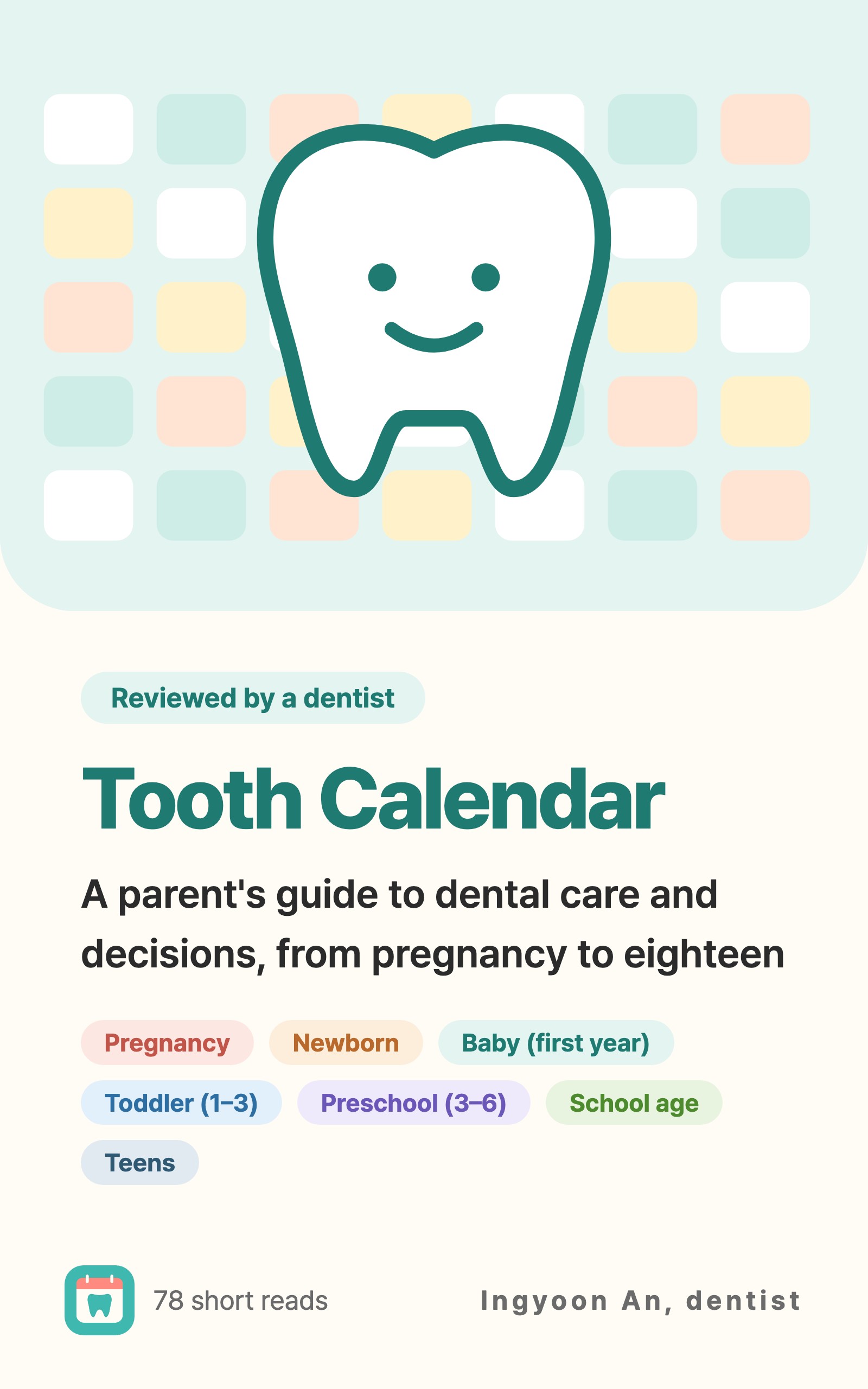
Tooth Calendar follows dental care from pregnancy to eighteen in 78 chapters. Explore the reasons behind feeding, brushing, baby-tooth decay, sedation, and injury decisions—including what can be watched and when to seek help. Age-based contents and a topic index help you find the concern you have today.
Get these at the right time
Enter your child's birth date (or due date) in the Tooth Calendar app and these articles arrive as reminders when they matter. Free, no sign-up.
Sources
- FDA · Safely Soothing Teething Pain and Sensitivity in Infants and Toddlers (2018)
- AAP · Teething: 4 to 7 Months (HealthyChildren.org) (2023)
- AAP · Fever and Your Baby (HealthyChildren.org) (2025)
The information in this article is for general educational purposes and does not replace professional dental care. Talk to a dentist about your child's condition.