 Tooth Calendar Blog
Mouthguards for Kids' Sports: Types, How to Choose, and How to Care for Them
Soccer, basketball, taekwondo, and cycling all carry a risk to front teeth. Why custom mouthguards fit best, why to wear one at practice too, and care tips.
At a glance
- Collisions or falls likely? Wear a mouthguard
- A custom-fitted guard from the dentist fits best
- Wear it at practice too, not just at games
When your child joins a soccer team or starts taekwondo, the worry about injuries comes along too. Hurting a front tooth from a blow to the face during sports is more common than you might think. Here's why a mouthguard matters, which kind to choose, and how to take care of it.
How does a mouthguard protect the teeth?
Getting hit by a ball, bumping into a teammate, or falling face-first during sports can break a front tooth or knock it out completely. That's especially hard once the front teeth have become permanent teeth, which have to last a lifetime.
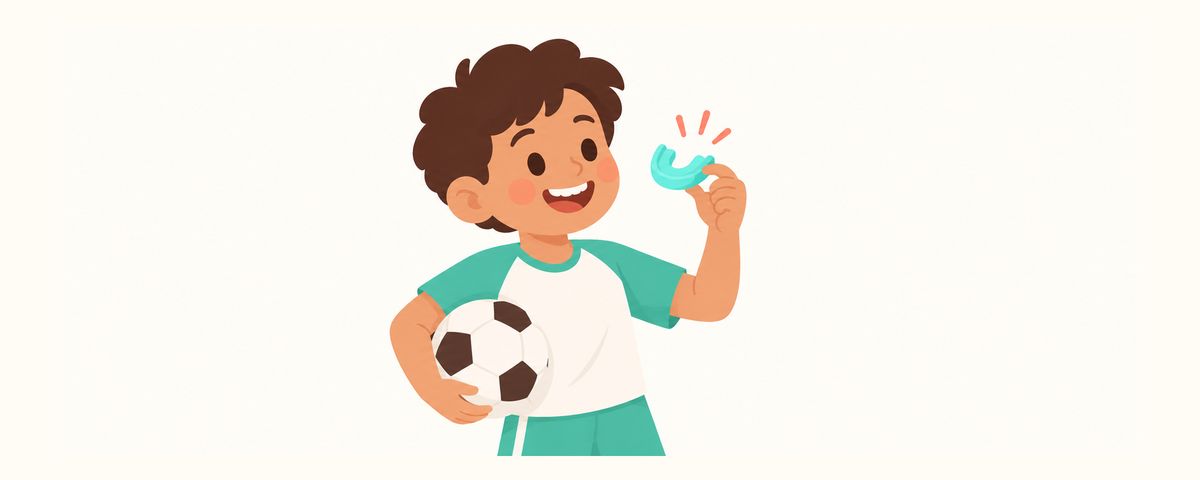
A mouthguard is a soft protector that fits over the teeth. It spreads out and absorbs the force of a blow, reducing the impact on the teeth, lips, and jaw. It also helps keep the lips and the inside of the cheeks from being cut by the teeth.
It's recommended for activities like these:
- Sports with body contact or flying balls, such as soccer, basketball, and taekwondo
- Activities with falls, such as cycling and scooters
There are three main kinds of mouthguards:
- Custom-fitted: Made by the dentist from an impression of your child's teeth. It fits best and stays in place well.
- Boil-and-bite: Softened in hot water, then bitten into to mold the shape. It's the next-best choice after custom.
- Stock (ready-made): Worn as is, without shaping. It falls out easily and makes breathing awkward, so it's not recommended.
Kids keep taking out a mouthguard that doesn't fit, so in the end it can't do its job. That's why custom-fitted guards are considered the best.
Getting ready, and wearing it right
- When your child starts a sport, ask the dentist about a custom-fitted mouthguard.
- Wear it at practice too, not just at games. Injuries happen just as often during practice.
- After playing, rinse it with water, let it dry, and store it in its own case with air vents.
- Don't leave it in a hot car or in the sun. Heat can change its shape.
- Replace it if it tears or gets loose.
If your child wears braces, use a mouthguard designed for braces instead of a regular one. Braces make it easier to cut the lips and cheeks, so it's even more important.
If your child says the mouthguard is uncomfortable, it usually doesn't fit well. A good fit shouldn't get in the way of talking or breathing much at all. Before giving up because your child dislikes it, have the dentist check the fit.
Kids wearing one for the first time may find it strange. Having them wear it at home for short stretches before practice, talking and taking deep breaths, helps them get used to it fast. If they take it out during a break, have them put it in the case instead of setting it down anywhere. Writing their name on the case helps keep it from getting mixed up with a teammate's.
A common mistake is using the same mouthguard for years. In elementary school, teeth keep falling out and coming in, so the shape of the mouth changes often. One that used to fit well can become loose before you know it.
Frequently asked questions
My child wears full gear for taekwondo. Do they still need a mouthguard?
If the sport involves blows to the face or falls, it's recommended. Even with headgear, the teeth and lips inside the mouth need their own protection.
Teeth are still changing at this age. Is a custom mouthguard worth it?
Yes. While many teeth are changing over, have the fit of the mouthguard checked at regular checkups. If it becomes loose or stops fitting, a new one is made.
My child keeps taking it out because it feels stuffy.
That usually means it doesn't fit well. If it's a stock guard, try switching to boil-and-bite or custom-fitted. If it's already custom, have the dentist check the fit.
Does a mouthguard mean my child's teeth can't get hurt?
It reduces the impact, but it can't prevent injury completely. If your child takes a hard hit to the teeth even while wearing one, have the dentist check.
When to see the dentist
- Your child is starting a new sport and you want to get a mouthguard fitted
- A tooth got hit during sports and is loose or has changed color (even if it doesn't hurt)
- A tooth is broken or knocked out (go right away)
- The mouthguard is torn or loose
- Your child has started braces and needs a mouthguard designed for braces
English ebook · Dentist Ingyoon An
A guide to the decisions behind dental care
Tooth Calendar follows dental care from pregnancy to eighteen in 78 chapters. Explore the reasons behind feeding, brushing, baby-tooth decay, sedation, and injury decisions—including what can be watched and when to seek help. Age-based contents and a topic index help you find the concern you have today.
Get these at the right time
Enter your child's birth date (or due date) in the Tooth Calendar app and these articles arrive as reminders when they matter. Free, no sign-up.
Sources
- AAPD · Policy on Prevention of Sports-related Orofacial Injuries (2023)
- ADA · Mouthguards (MouthHealthy) (2024)
The information in this article is for general educational purposes and does not replace professional dental care. Talk to a dentist about your child's condition.