 Tooth Calendar Blog
Fluoride Mouth Rinse for Kids From Age 6: Who Needs It and How to Use It
Fluoride rinse is an extra tool for cavity-prone kids from age 6, once they can spit. Who needs it, how to swish once a day for 1 minute, and safe storage.
At a glance
- From age 6, once your child can spit without swallowing
- Swish for one minute, then no food or drink for 30 minutes
- Keep the rinse out of children's reach
Once kids start elementary school, many parents ask, "Should my child use a fluoride rinse too?" Not every child needs one. But for kids who get cavities easily, it can be a helpful extra. Here's a step-by-step look at when to start, who it's for, and how to use it.
How does a fluoride mouth rinse help?
Fluoride strengthens tooth surfaces and helps prevent cavities. As your child swishes, a fluoride rinse reaches every corner of the tooth surfaces, adding protection to spots that brushing alone may not fully cover.
But it's only an extra tool. The basics of cavity prevention are still brushing twice a day with fluoride toothpaste and regular fluoride treatments at the dentist. If those basics are going well and your child rarely gets cavities, there's no need to add a rinse.
A rinse is recommended for kids at higher risk of cavities. For example:
- Kids who keep getting new cavities
- Kids who wear braces, where food and plaque get trapped easily
It's not recommended before age 6. Young children can't spit out liquid held in the mouth and tend to swallow it. And at this age, fluoride toothpaste plus regular fluoride treatments at the dentist are enough. So along with age, the real test is "Can my child spit without swallowing?" If your child is over 6 but still not good at spitting, it's fine to wait a little longer.
Practice first, then use it like this
Instead of starting with the rinse, practice with plain water first.
- Have your child take a sip of water, swish it around the mouth, and spit it into the sink. Try it a few times and make sure none is swallowed.
- Once they spit well, use a 0.05% sodium fluoride rinse once a day. An adult measures the amount on the label and pours it into a cup.
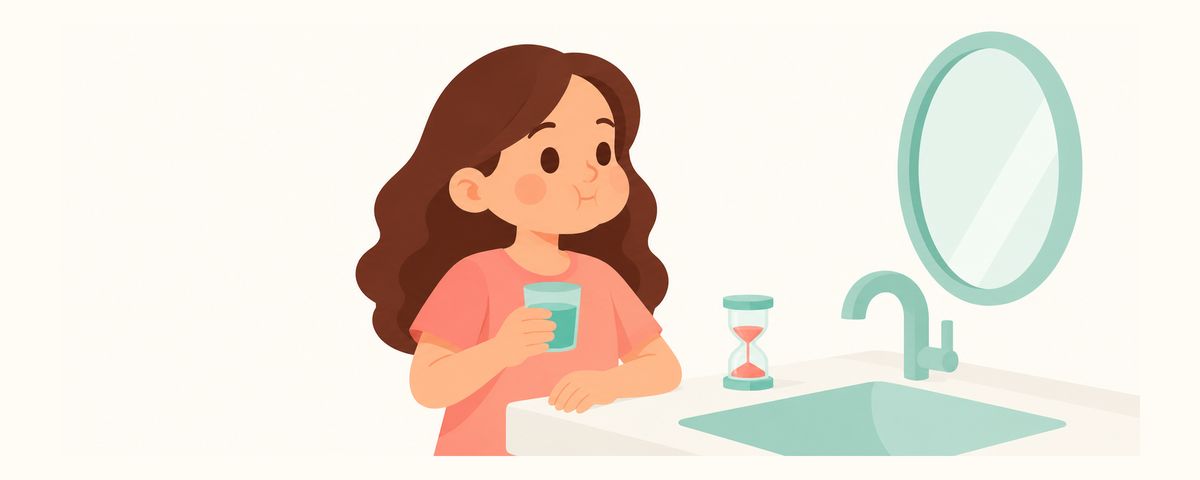
- Swish for 1 minute, reaching every corner of the mouth, then spit. A short song or a sand timer helps kids keep going for the full time.
- After spitting, don't rinse with water. The fluoride left on the teeth needs to stay there to work.
- Don't eat or drink for 30 minutes after rinsing.
Picking the same time each day makes it easier to keep up. And even after starting the rinse, keep brushing twice a day with fluoride toothpaste. A rinse can't replace brushing. Swishing can't scrub away plaque the way a toothbrush does.
A common mistake is letting a child hold the bottle and pour their own dose. When kids do it alone, the amount varies, and a younger sibling might copy and drink it. Always have an adult measure the dose.
Frequently asked questions
We use fluoride toothpaste. Is adding a rinse too much fluoride?
For a child who can spit, uses the set amount, and doesn't swallow it, a rinse is used as an extra on top of brushing. But whether your child really needs it, and which strength is right, depends on their cavity risk. Talk with the dentist before starting.
Can my child rinse with water after using it?
It's better not to. Rinsing with water washes away the fluoride that should stay on the tooth surfaces. If the taste feels strange and your child struggles, practice swishing and spitting with water first, and use the product in the amount and for the time on the label. If 1 minute is still too hard, talk with the dentist about when to start.
A younger sibling wants to try it too. Can they share?
It's not recommended under age 6. Little ones tend to swallow it, and at that age fluoride toothpaste plus fluoride treatments at the dentist are enough. Let the younger one practice spitting with plain water alongside.
My child just started braces. Should they use a rinse?
Kids with braces count as higher cavity risk, so a rinse is often recommended. Careful cleaning around the braces comes first. Ask the dentist at a regular checkup during treatment whether to add a rinse.
Talk with the dentist first when
- You're thinking about starting a rinse (to decide whether it's needed and at what strength)
- New cavities keep showing up even after treatment
- Your child has just started wearing braces
- Your child is over 6 but still can't spit out water well
- Your child swallowed a large amount of rinse at once (call right away)
English ebook · Dentist Ingyoon An
A guide to the decisions behind dental care
Tooth Calendar follows dental care from pregnancy to eighteen in 78 chapters. Explore the reasons behind feeding, brushing, baby-tooth decay, sedation, and injury decisions—including what can be watched and when to seek help. Age-based contents and a topic index help you find the concern you have today.
Get these at the right time
Enter your child's birth date (or due date) in the Tooth Calendar app and these articles arrive as reminders when they matter. Free, no sign-up.
Sources
- AAPD · Fluoride Therapy (2023)
The information in this article is for general educational purposes and does not replace professional dental care. Talk to a dentist about your child's condition.