 Tooth Calendar Blog
Sealants on Baby Molars: Does My Child Need Them? Deciding by Cavity Risk
Sealants and fluoride varnish on baby molars depend on each child's cavity risk. What sealants are, how risk is judged, home care, and when to see a dentist.
At a glance
- Baby molar sealants are for kids at high cavity risk
- High risk? Ask about varnish every 3 to 6 months
- No numbing, no drilling: it's simply painted on
When the dentist asks at a checkup, "Should we put sealants on the baby molars?", it can be a tough call. Does a tooth that will fall out really need it? Does it hurt? A friend's child didn't get them, so why is it suggested for yours? Here's how decisions about sealants and fluoride varnish are made.
What sealants are, and who gets them
The chewing surfaces of the molars have deep, hollow grooves. Toothbrush bristles have a hard time reaching all the way in, so food and bacteria easily settle there. A sealant fills these grooves with a thin resin coating to keep food and bacteria out. It's a preventive treatment.
Sealants are well proven on permanent molars. They can also be used on baby molars, but not on every child the same way. They're used when a child's cavity risk is high. Fluoride varnish works the same way: how often your child gets it depends on their cavity risk.
Cavity risk isn't decided by just one thing. The dentist looks at several things together, like these.
- Whether your child has had cavities before, or has early cavities like white spots now
- How often your child has snacks and sweet drinks
- Whether fluoride toothpaste is used, and whether a parent finishes the bedtime brushing
- Whether your child has had regular checkups so far
"Baby teeth fall out, so it doesn't matter" is a common myth. Baby molars stay in use until age 10 to 12, so a cavity now can bother your child for quite a long time. Baby teeth have a thin outer layer, so cavities tend to spread fast, and the pain can lead to chewing on only one side or not eating well.
This is also the age when the first permanent molars are getting ready to come in behind the last baby molars. So the checkup looks at both the baby molars and the space in the mouth. Taking good care of the baby molars now helps create a good environment for the permanent molars coming soon.
What to do before and after the checkup
- At the regular checkup, have the dentist assess your child's cavity risk. Being honest about snack and brushing habits helps the dentist decide.
- If the risk is high, discuss sealants on the baby molars and fluoride varnish every 3 to 6 months.
- If the risk is low, brushing twice a day with fluoride toothpaste and sticking to snack times may be enough. From age 3, use a pea-sized amount of toothpaste. Give snacks and sweet drinks only at set times, and water in between.
- If your child has sealants, have them checked at every visit to make sure they're still intact.
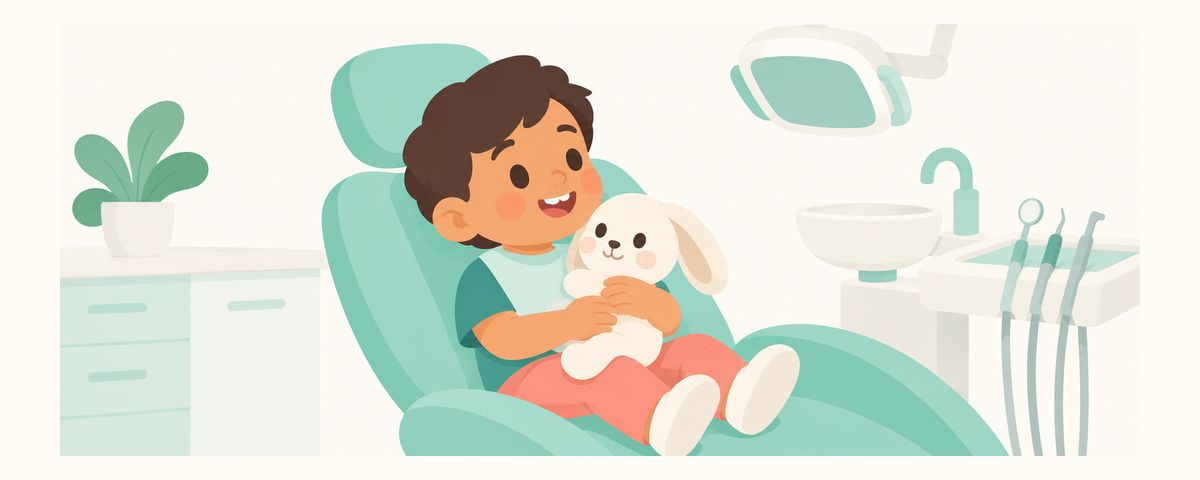
Placing a sealant needs no numbing and no drilling. The tooth is cleaned and the coating is painted on. So there's very little for a child to fear. Before the visit, keep it short and easy, like "The dentist is going to paint a thin shield on your teeth."
A common mistake is getting relaxed about brushing after sealants. Sealants only protect the grooves on the chewing surface. The sides of the teeth and the spaces between the molars are the same as before, so keep brushing and flossing just as you did.
Frequently asked questions
With sealants, will my child not get cavities?
They help prevent cavities in the grooves of the chewing surface, but they can't prevent cavities on the sides or between the molars. Brushing and snack habits still matter.
Can sealants come off?
Chewing can make part of a sealant come off. That's why it's checked at every visit, and reapplied at the dentist if needed.
What is fluoride varnish?
It's a preventive treatment where fluoride is painted on the teeth to harden the outer layer. If your child's cavity risk is high, talk about getting it every 3 to 6 months.
Will the permanent molars that are coming in get sealants too?
Yes. Permanent molars are where sealants are best proven. The first permanent molars come in around age 6, and they're sealed once fully in, because the whole chewing surface needs to be showing so it can be kept dry during the procedure. If your child has a high cavity risk, the dentist may use a different, temporary protection (such as a glass ionomer sealant) even before the molar is fully in, so talk with the dentist once you see a new molar.
If the dentist says no sealants, is my child okay?
It means the dentist sees your child's cavity risk as low, so you can rest easy. But risk can change with habits, so it's checked again at every visit.
When to see a dentist
- The molar grooves look dark
- Food often gets stuck in the molars
- Your child seems to hurt when chewing or chews only on one side
- A sealant seems to have come off or the surface feels rough
- You see a chalky white spot near the gums
English ebook · Dentist Ingyoon An
A guide to the decisions behind dental care
Tooth Calendar follows dental care from pregnancy to eighteen in 78 chapters. Explore the reasons behind feeding, brushing, baby-tooth decay, sedation, and injury decisions—including what can be watched and when to seek help. Age-based contents and a topic index help you find the concern you have today.
Get these at the right time
Enter your child's birth date (or due date) in the Tooth Calendar app and these articles arrive as reminders when they matter. Free, no sign-up.
Sources
- MOHW_KR · 영유아 건강검진(구강검진) 안내 (2024)
- AAPD · Use of Pit-and-Fissure Sealants (2016)
The information in this article is for general educational purposes and does not replace professional dental care. Talk to a dentist about your child's condition.