 Tooth Calendar Blog
The 6-Month Dental Checkup: Why Kids Need It Even When Nothing Hurts
Early cavities don't hurt, so they're hard to spot at home. What happens at a 6-month checkup, how to prepare, what to do after, and signs not to wait for.
At a glance
- Checkup and fluoride varnish every 6 months
- Early cavities don't hurt, so they're hard to spot at home
- Book the next visit before you leave
"Nothing hurts. Do we really have to go every 6 months?" It's a question that often comes up before a checkup. By the time a cavity starts to hurt, it has often progressed quite a bit. Here's why regular checkups matter, what happens there, and how to prepare.
Early cavities don't hurt
In the early stage, cavities don't hurt. At first, the tooth surface just turns chalky white and dull, which is easy for parents to miss. Cavities that start in the grooves of the molars or where two teeth touch are especially hard to find by looking at home.
Kids also have a hard time saying clearly, "My tooth feels weird." So if you wait until your child is in pain, treatment can get bigger. When a cavity is caught at the early white-spot stage, fluoride and changes in daily habits can stop it or slow it down. Once a hole forms, it needs treatment.
Checkups every 6 months are a reliable way to find these small changes while treatment is still simple. A regular checkup usually includes:
- Checking for cavities and early changes.
- A professional fluoride varnish to strengthen the tooth surfaces.
- Brushing tips that fit your child's age.
- A look at eating habits like snacks, drinks, and feeding.
- A check on how teeth are coming in and falling out.
For kids at high risk of cavities, the dentist may suggest shorter intervals. If your dentist has given you an interval, follow it.
Before and after the visit, here's what to do
Before the visit:
- Brush at home before you go. Clean teeth make even small changes easier to see.
- Open the app's tooth chart and jot down any questions ahead of time.
- Mention anything that has hurt recently, any falls or bumps that injured a tooth, and any medications.
- Book a time when your child is usually in a good mood, and avoid nap time.
After the visit:
- After fluoride varnish, hold off on eating and brushing for as long as the dental office tells you. Instructions vary by product, so follow what you're told that day.
- Write down the advice you got at the checkup, and start trying it that same day.
- When the checkup is over, book the next 6-month visit right away. If you put it off, it's easy to miss the timing.
Between checkups, take a look in your child's mouth at home now and then. In good light, gently lift the upper lip to see the outer surface of the front teeth where they meet the gums, and check the color of the grooves on the chewing surfaces of the molars. If you see a white area or brown spot that looks different from usual, take a photo and show it at the checkup. It makes explaining easier. Record the checkup date and what you heard in the app's dental visit log.
If your child is scared of the dentist, keep it short and upbeat, like "The dentist is going to see how well you've been brushing." With steady regular checkups, the dentist becomes a familiar place rather than somewhere you only go when it hurts, and kids gradually get more comfortable with visits.
United States guidance
US: Recall interval and insurance
The AAPD recommends recall visits every 6 months, or more often for children at high cavity risk. Many dental plans cover two preventive visits and cleanings per year, but benefits vary by plan, so check yours.
Frequently asked questions
Do we really have to go even if nothing hurts?
Yes. Early cavities don't hurt, so going when nothing hurts is how they get found early. The earlier they're found, the simpler the treatment.
The dentist wants my child to come more often.
If your child has had cavities or is at high risk, a shorter interval than 6 months may be recommended. It's advice tailored to your child, so follow that interval.
The dentist wants to take X-rays. Is that okay?
Dental X-rays use a very small amount of radiation, and they're taken when the dentist needs to check things that can't be seen by eye, like cavities between the teeth. If you're wondering why they're needed, feel free to ask.
Does my child need fluoride varnish every time?
It's often done along with the regular checkup. The interval can change depending on cavity risk, so follow your dentist's guidance.
My child cries and resists during the checkup.
It's very common for young children to cry at the dentist. The dentist can still check the mouth while a child cries, and with steady checkups, most kids get a little more comfortable over time. Playing an "open wide and say ahh" game at home can help too.
Don't wait for the next appointment when
- Your child says a tooth hurts or seems uncomfortable when eating
- You see white spots or brown stains on the teeth
- A tooth was injured in a fall or bump
- The gums are swollen or you see something like pus
- Your child only wants to chew on one side
English ebook · Dentist Ingyoon An
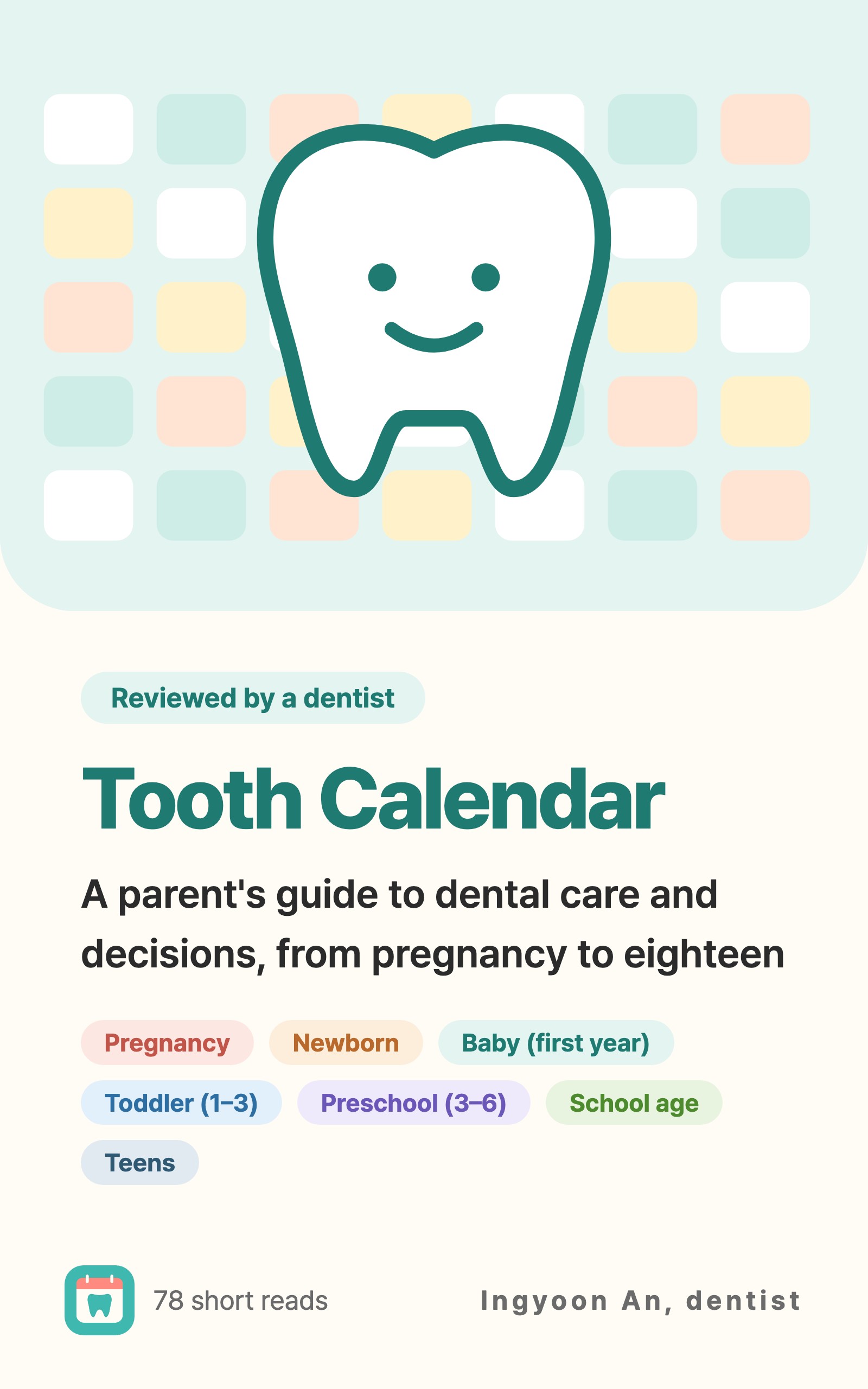
A guide to the decisions behind dental care
Tooth Calendar follows dental care from pregnancy to eighteen in 78 chapters. Explore the reasons behind feeding, brushing, baby-tooth decay, sedation, and injury decisions—including what can be watched and when to seek help. Age-based contents and a topic index help you find the concern you have today.
Get these at the right time
Enter your child's birth date (or due date) in the Tooth Calendar app and these articles arrive as reminders when they matter. Free, no sign-up.
Sources
The information in this article is for general educational purposes and does not replace professional dental care. Talk to a dentist about your child's condition.