 Tooth Calendar Blog
Baby Canines Coming In: Timing, Brushing Tips, and Regular Checkups
Baby canines usually come in at 16 to 23 months. How to brush them, how to handle brushing battles, and why now is a great time to start regular checkups.
At a glance
- Canines usually come in at 16–23 months, often top first
- The brush slips on pointy canines, so go slowly at the gum line
- Book a checkup and fluoride varnish every 6 months
Pointed canines are starting to poke through in the gap between the front teeth and the first molars. Your child's row of teeth is almost complete. This is also a great time to start regular checkups, so here's how to care for the canines and what happens at a checkup.
The gaps are filling in
The canines (the pointed "eye teeth") usually come in between 16 and 23 months. They fill the gap left when the first molars came in first, and the upper ones often come in a little earlier. Once the canines are in, the row of teeth runs all the way from the front teeth to the molars.
If the order or timing differs from average by about 6 months, it's usually normal. It's also common for the canines to come in before the first molars, or for the top and bottom to switch order. But if the two sides are very different or one side is unusually late, ask at the checkup.
The gums may swell and your child may be fussy when the canines come in, too. A chilled teething ring or gentle pressure on the gums with a clean finger can bring relief.
At this age, kids want to try more things on their own and start clearly refusing what they don't like. That's why brushing battles get worse for many kids around now. So while the canines are coming in, it's a good time to fine-tune how you brush and your daily routine.
Brush slowly along the gums and book a checkup
- Brush twice a day with a rice-grain smear of fluoride toothpaste, with a parent doing the brushing.
- Canines are pointed, so the brush slips off easily. Hold the brush close to the head and go slowly along the gum line.
- Right behind the canine, where it meets the first molar, food tends to get stuck. If the teeth are touching, use floss.
- Log new teeth in the app's tooth chart. It makes it easier to explain at checkups which teeth came in when.
- Book a checkup and fluoride varnish every 6 months.
When your child fights brushing, try this. Hand your child a toothbrush, let them brush your teeth, then say "Now it's my turn!" and switch. Letting your child pick the toothbrush color helps too. For a wiggly child, two adults can sit knee to knee. One holds your child's hands while the other brushes, so it's over quickly.
When you're done, always give praise. If the teeth didn't get fully cleaned today, that's not a failure. Brushing at the same time every day adds up, and the pushback slowly fades.
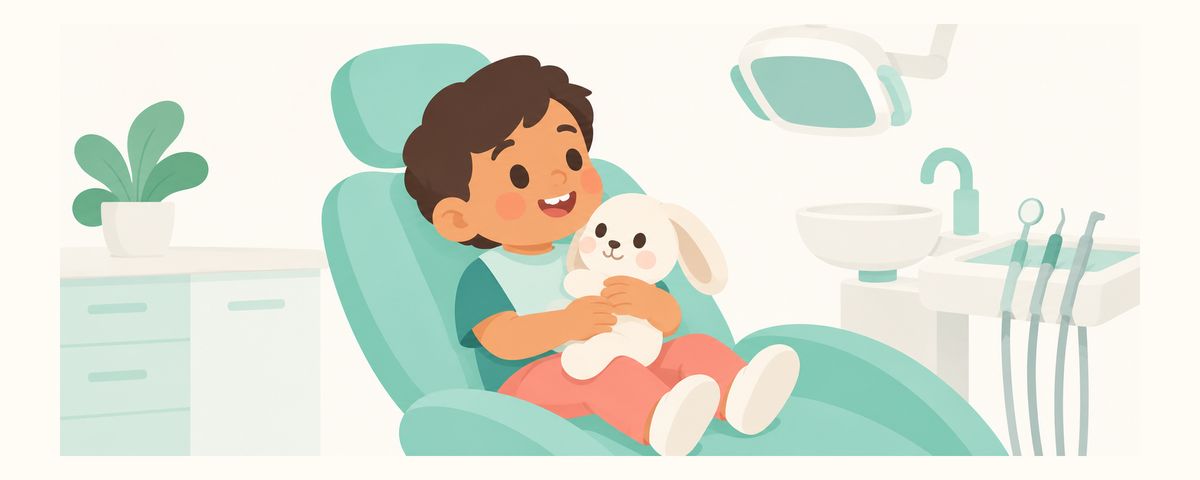
A checkup covers more than looking for cavities. The dentist also goes over brushing technique, eating habits, and pacifier and bottle use. It's a great chance to learn firsthand how to brush your child's teeth. Many countries also offer public checkups for young children around this age, so check what's available where you live.
When you go, bring the app's tooth chart, the toothbrush and toothpaste you use, and a note with your questions. If your child still has night feeds or uses a bottle or pacifier, be honest about it. You won't be scolded. It's information to help find the right way to cut back for your child.
Frequently asked questions
The canines are coming in late. Is that okay?
Being about 6 months off the average is usually normal. If the two sides are very different or one side is late, have it checked at the checkup.
We've never been to the dentist.
It's time to stop putting it off. Going before cavities form helps your child remember the dentist as a comfortable place, and you can learn how to care for the teeth ahead of time.
Why get fluoride varnish every 6 months?
The fluoride applied at the dentist is stronger than home toothpaste and helps harden the tooth surface. If your child's cavity risk is high, the dentist may suggest a shorter interval.
My child hated brushing so much that we skipped a day.
That's okay. Just brush as usual next time. But if the pushback is intense every day, ask for brushing tips at the checkup.
Don't put off the dentist if
- Your child has never been to the dentist
- You see white spots or brown stains on the teeth
- Your child fights brushing so hard that you can barely brush
- A canine has come in on one side, and the other side still hasn't after a long time
- Your child seems to hurt when eating or has injured a tooth
English ebook · Dentist Ingyoon An
A guide to the decisions behind dental care
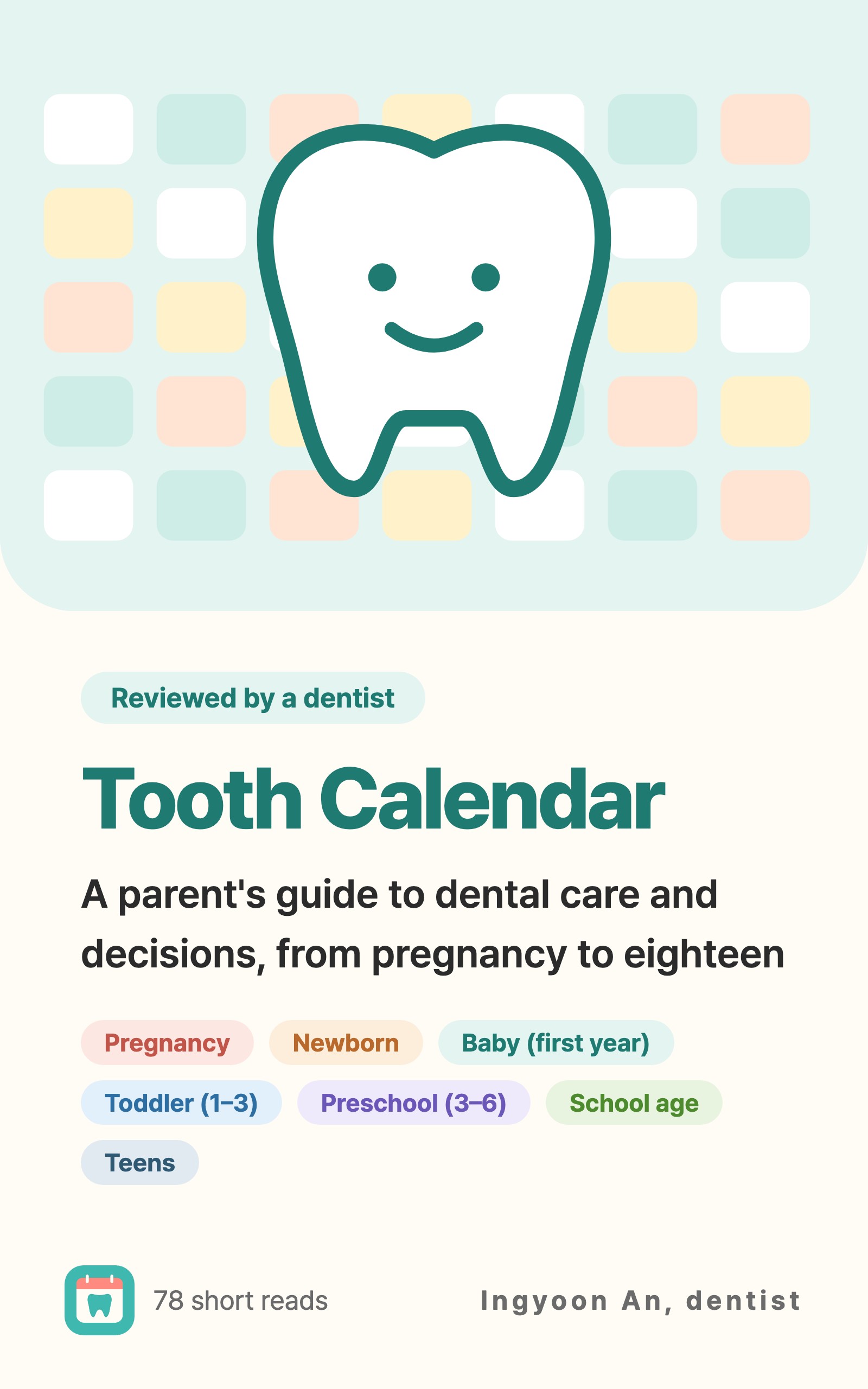
Tooth Calendar follows dental care from pregnancy to eighteen in 78 chapters. Explore the reasons behind feeding, brushing, baby-tooth decay, sedation, and injury decisions—including what can be watched and when to seek help. Age-based contents and a topic index help you find the concern you have today.
Get these at the right time
Enter your child's birth date (or due date) in the Tooth Calendar app and these articles arrive as reminders when they matter. Free, no sign-up.
Sources
- ADA · Eruption Charts (2024)
- MOHW_KR · 영유아 건강검진(구강검진) 안내 (2024)
The information in this article is for general educational purposes and does not replace professional dental care. Talk to a dentist about your child's condition.