 Tooth Calendar Blog
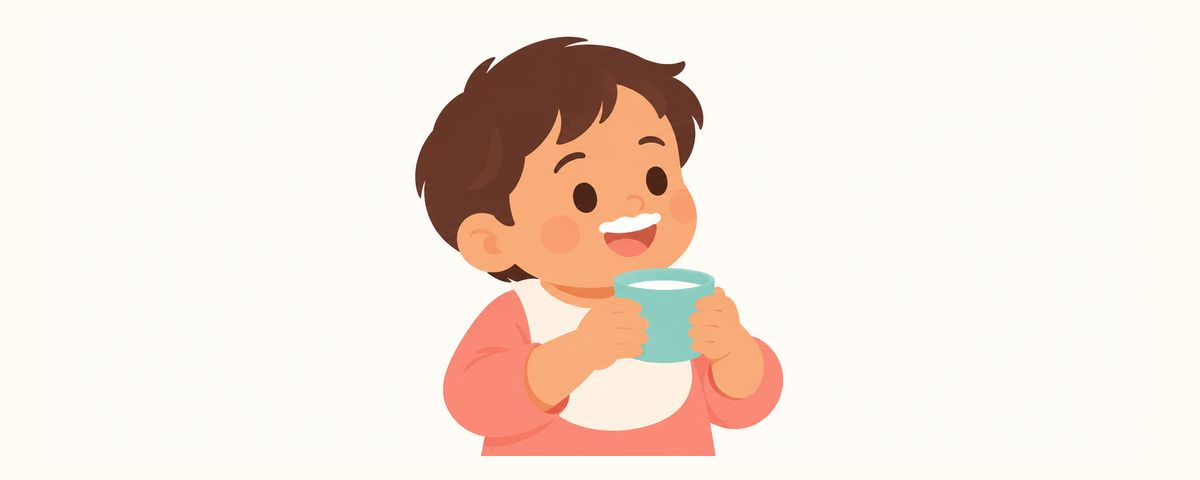
Learning to Drink from a Cup: When to Start and When to Drop the Bottle
By 6 to 9 months, babies can drink from a cup with help. Choosing a straw or open cup, how to practice, and steps to wean from the bottle by 18 months.
At a glance
- Practice with a straw cup or open cup
- Say bye to the bottle by 18 months at the latest
- No carrying around juice or sweet drinks in a cup
When you offer a cup to a baby who's used to a bottle, most of it ends up spilled, spit out, or played with. So it's tempting to wait, thinking it's too early. But the earlier you start practicing with a cup, the easier it is to give up the bottle. Here's when to start, which cup to use, and how to practice.
Why cup practice matters for teeth
By 6 to 9 months, babies can drink from a cup when a parent helps hold it. At first, half of it spills, but getting comfy with a cup now makes giving up the bottle around the first birthday much easier.
Long-term bottle use tends to bring habits that aren't good for teeth, like carrying a bottle of sweet drinks around and sipping, or needing a bottle every time they fall asleep. These habits keep the teeth in contact with sugar for longer and raise the risk of cavities. Saliva drops during sleep, so the mouth isn't rinsed as well, which makes sleeping with a bottle a major cause of cavities on the front teeth.
That's why the goal is to start weaning around 12 months and finish by 18 months at the latest.
Straw cups and open cups are recommended. Spouted sippy cups work a lot like a bottle, so they easily become one more bottle you'll have to give up later. Starting with a straw cup or open cup means you only have to switch once.
Spills are okay. Here's how to practice
Try this for the first few practice sessions.
- At mealtime, sit your baby upright in a chair with a bib on.
- Pour just a little water or formula into a small open cup, barely covering the bottom.
- Hold the cup together with your baby, touch it to their lips, and tip it very slowly.
- After one sip, pause for a moment and try again. Don't rush, so your baby doesn't choke.
- Once your baby gets the hang of it, let them hold the handles while you just support the bottom.
Straw cups take some sucking power, so your baby may struggle at first. While your baby has the straw in their mouth, gently tilt or squeeze the cup so a little water comes out, and they'll catch on quickly.
Spills are part of learning. Get ready ahead of time so wet clothes and floors aren't a big deal, and cheer loudly when your baby takes a good sip.
At the first birthday, start swapping bottles for cups. Replace daytime bottles first, one at a time, and drop the bedtime bottle last, since that's the one your baby relies on most. When you work on the bedtime bottle, try feeding a little away from the bed, then brushing the teeth after the drink, then putting your baby to sleep.
Watch out for these common mistakes when weaning from the bottle.
- Taking away every bottle overnight. If your baby struggles, tired parents often end up bringing the bottle back. Switching one at a time is actually faster.
- Replacing the bottle with only a spouted sippy cup. Since it works much the same way, you'll have to wean all over again.
- Letting your child carry a cup all day. Keep drinks to meals and snack times, and offer water if they're thirsty in between.
It's natural for babies to fuss while giving up the bottle. Fill the comfort the bottle used to give with cuddles and play.
Frequently asked questions
When should we start practicing with a cup?
You can try around the time you start solids. By 6 to 9 months, babies can drink with help, so let your baby take little sips at mealtimes.
Straw cup or open cup: which is better?
Both are recommended. Start with whichever your baby finds easier, and try to let them experience both. Just skip spouted sippy cups.
What should go in the cup?
Water and breast milk or formula. No fruit juice before 12 months, and even after that, don't let your child carry around a cup of sweet drinks.
I just can't get rid of the bedtime bottle.
It's natural for the bedtime bottle to go last. Phase out daytime bottles first, and at night, keep the routine of brushing after the feed before sleep while slowly cutting back.
When to ask for help
- Your child is still having trouble giving up the bottle past 18 months
- Your child often chokes or coughs when drinking from a cup
- Your child still can only fall asleep with a bottle
- You see a white band or brown spot near the gumline of the upper front teeth
English ebook · Dentist Ingyoon An
A guide to the decisions behind dental care
Tooth Calendar follows dental care from pregnancy to eighteen in 78 chapters. Explore the reasons behind feeding, brushing, baby-tooth decay, sedation, and injury decisions—including what can be watched and when to seek help. Age-based contents and a topic index help you find the concern you have today.
Get these at the right time
Enter your child's birth date (or due date) in the Tooth Calendar app and these articles arrive as reminders when they matter. Free, no sign-up.
Sources
The information in this article is for general educational purposes and does not replace professional dental care. Talk to a dentist about your child's condition.