 Tooth Calendar Blog
Dental Medications in Pregnancy: Which Antibiotics and Painkillers to Avoid
Many dental medications are fine in pregnancy, but a few are generally avoided: antibiotics that stain baby's teeth, choosing pain relief, and what to mention.
At a glance
- Tetracycline-class antibiotics are usually avoided
- For dental pain, acetaminophen is usually first choice
- Avoid NSAIDs like ibuprofen from 20 weeks on
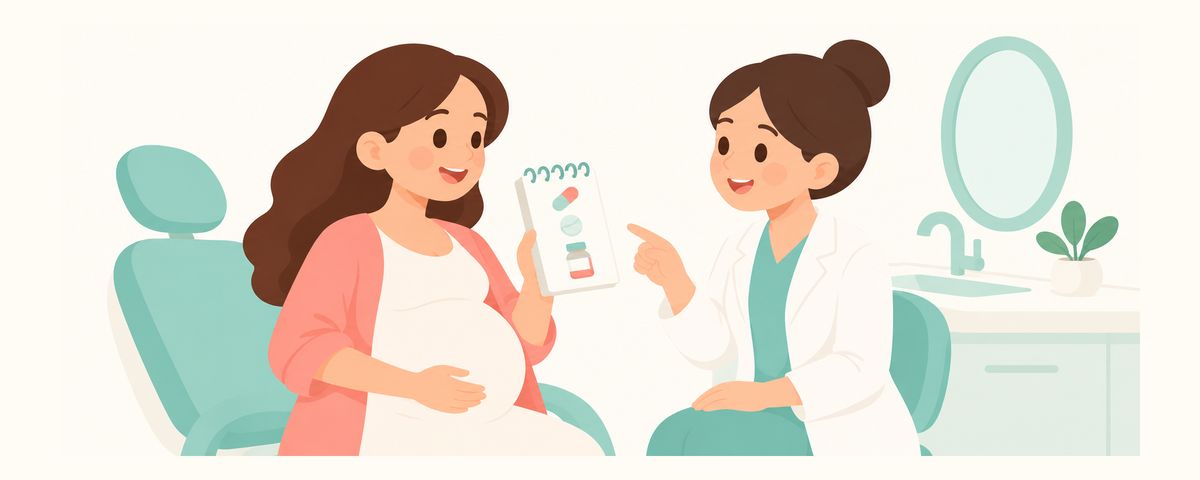
When a tooth hurts during pregnancy, your first worry is often whether it's okay to take anything. So some moms put up with the pain, while others just take whatever is in the medicine cabinet. Here are the key rules for dental medications during pregnancy, and what to mention when you get a prescription.
Only a few medications are off-limits
Many of the medications used in dental care are fine during pregnancy. But a few are generally avoided, so the rule for any medication is to mention you're pregnant before it's prescribed.
Tetracycline-class antibiotics are generally avoided in pregnancy. This group includes tetracycline, doxycycline, and minocycline. Your baby's teeth start forming early in pregnancy, and these medications can get built into the forming teeth and stain the baby's teeth. The color and pattern vary with when and how much the baby was exposed. Once that staining forms, it stays even after the teeth are fully grown.
For pain relief, dentists usually consider acetaminophen first. Follow your doctor's instructions on how much to take and for how many days.
NSAIDs like ibuprofen are advised against from 20 weeks of pregnancy on. Even if it's a medicine you've always kept at home, it's best not to take it on your own during pregnancy.
When an antibiotic is needed, your dentist and OB will choose one together. Which medication to use is decided by looking at how serious the infection is, how far along you are, and your overall health.
Many moms think, "I shouldn't take any medicine at all while pregnant." But the key is avoiding the few medications that are off-limits and using the ones you need properly. Leaving inflammation and pain untreated for a long time is hard on your body too.
Here's what to do when getting a prescription
At the office, just remember this order:
- Before treatment, say first that you're pregnant and how many weeks along you are.
- Mention every medication and supplement you're taking now. Keeping a list on your phone makes it easy.
- If you're wondering whether a prescribed medication is okay in pregnancy, ask right then.
- Stick to the dose and duration you were told.
- Share the same list with your OB so both offices have the same information.
There are a few mistakes moms often make:
- Putting up with the pain out of worry about medication: Leaving the cause untreated lets the infection grow, which can end up requiring more medication and treatment.
- Stopping a prescribed antibiotic on your own because symptoms got better: Don't stop a prescribed medication on your own. If you're worried, talk with the doctor who prescribed it.
- Taking a painkiller or cold medicine from home without checking: Combination medicines can contain NSAIDs. Tell the pharmacist you're pregnant and have them check. But if your doctor prescribed low-dose aspirin, don't stop it on your own. Talk with that doctor.
Frequently asked questions
I took medication before I knew I was pregnant. What should I do?
Rather than worrying alone, write down the name of the medication and when you took it, and talk it over with your OB. The answer depends on which medication you took and when, so talking with a professional is the most reliable.
Do I need to avoid dental numbing too?
The local anesthesia used in dental care can be used during pregnancy. Getting treatment comfortably with numbing is easier on your body than enduring the pain.
Can I get by on painkillers and get treatment after the baby is born?
If it hurts enough that you need pain relief, treating the cause is safer. Fixing the cause at the dentist is better for you and your baby than taking medication for a long time.
I'm worried about staining my baby's teeth. Are all antibiotics risky?
No. The group avoided because of baby tooth staining is the tetracycline class. When other antibiotics are needed, your dentist and OB will choose one together.
Do I still need to be careful while breastfeeding after birth?
You can get dental treatment and local anesthesia while breastfeeding. Routine local anesthesia doesn't mean you need to stop breastfeeding or throw out breast milk. Prescription medications and sedation are checked separately, so if you mention you're breastfeeding before treatment and prescriptions, they'll choose what suits it.
When to see your dentist
- A tooth hurts enough that you're reaching for pain relief
- Tooth pain is keeping you up at night or making eating hard
- Your gums or face are swelling
- Pain or swelling doesn't improve even with the prescribed medication
- You have an unusual reaction after taking a medication (let your OB know too)
English ebook · Dentist Ingyoon An
A guide to the decisions behind dental care
Tooth Calendar follows dental care from pregnancy to eighteen in 78 chapters. Explore the reasons behind feeding, brushing, baby-tooth decay, sedation, and injury decisions—including what can be watched and when to seek help. Age-based contents and a topic index help you find the concern you have today.
Get these at the right time
Enter your child's birth date (or due date) in the Tooth Calendar app and these articles arrive as reminders when they matter. Free, no sign-up.
Sources
- ACOG · Committee Opinion No. 569: Oral Health Care During Pregnancy and Through the Lifespan (2013)
- FDA · Medicine and Pregnancy (2023)
The information in this article is for general educational purposes and does not replace professional dental care. Talk to a dentist about your child's condition.