 Tooth Calendar Blog
Your Baby's Teeth Are Forming Now: Tooth Development in Pregnancy and Nutrition
Baby teeth start forming around week 6 of pregnancy. How teeth grow in the womb, and why a balanced diet matters more than any special food or supplement.
At a glance
- Baby teeth start forming around week 6
- No special foods needed. A balanced diet is what counts
- Ask your doctor first before adding other supplements
Your baby's teeth won't show up until well after birth, but they're actually already forming in the womb. Many moms wonder what to eat now to give their baby strong teeth, or whether they need a special supplement. Here's how your baby's teeth develop during pregnancy, and what's good for you to keep in mind.
How your baby's teeth grow in the womb
Your baby's teeth start forming around week 6 of pregnancy. At this point, they aren't shaped like teeth yet. Tiny tooth buds form inside the area that will become the gums. Over the course of pregnancy, these buds take shape little by little and grow into hard teeth.
So even though no teeth are visible when your baby is born, all 20 baby teeth are already growing inside the gums. After birth, they'll push through the gums one by one over time. The first tooth usually appears around 6 months of age.
Here's one thing to remember. Unlike bone or skin, teeth never regrow once they're formed. After they're fully formed, damage doesn't repair itself. That's why your balanced nutrition matters now, while the teeth are forming.
That doesn't mean you need special foods or expensive supplements. Everything your baby's teeth need is found in everyday meals. Eating a little of everything is the surest approach.
Here's how to eat a balanced diet
Steady, everyday habits matter more than an elaborate meal plan.
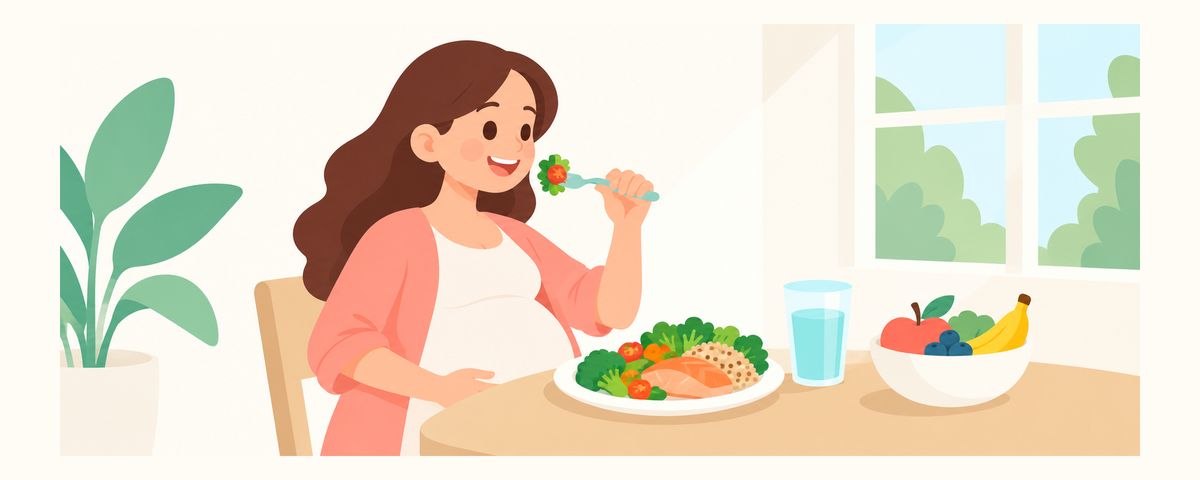
- Calcium: Have a little milk, cheese, tofu, or small fish eaten with the bones every day.
- Protein: Add meat, fish, eggs, or beans to each meal.
- Vitamin D: Include foods with vitamin D too. It helps your body use calcium well.
- Supplements: Keep taking the prenatal vitamins your doctor recommends.
- Water and meals: When you're thirsty or hungry, choose water and real meals over sugary drinks and snacks.
A common mistake is hearing that something is "good for the baby's teeth" and taking extra calcium or other supplements on your own. These can overlap with the prenatal vitamins you're already taking, so the rule is to add any other supplements only after talking with your doctor.
Cutting back on sugary drinks and snacks is good for your own teeth, too. When morning sickness or hunger has you eating small amounts often, cavities can form easily in your teeth. Your oral health also affects the mouth environment your baby is born into, so taking care of it now pays off twice.
There may be times when morning sickness makes it hard to eat a balanced diet. In that case, it's okay to start with whatever you can eat. If you're worried about nutrition, don't struggle alone. Talk with your OB.
Frequently asked questions
Should I take extra calcium for my baby's teeth?
For most moms, a balanced diet plus the prenatal vitamins your doctor recommends is enough. If you'd like to add calcium separately, talk with your doctor first.
Will taking fluoride make my baby's teeth stronger?
Taking fluoride supplements during pregnancy for the baby's teeth isn't recommended. Brushing twice a day with fluoride toothpaste helps protect your own teeth, and there's nothing to worry about there.
Are there any special foods I should eat?
No single food will make your baby's teeth strong. Eating a variety of foods with calcium, protein, and vitamin D is best.
Is there anything I need to do at the dentist right now?
There's nothing special to do at the dentist for your baby's teeth. But if you haven't had your own checkup yet, book one and mention you're pregnant.
Is it true that the baby takes calcium from my teeth?
Calcium doesn't leave your fully formed teeth and go to the baby. Tooth and gum problems during pregnancy are usually linked to gum inflammation, morning sickness, and frequent snacking. Brushing well and getting checkups is how you protect your teeth.
When to see your dentist
- You haven't had a dental checkup since becoming pregnant
- Swollen, bleeding gums keep going for more than 2 weeks
- Sensitive or painful teeth make eating hard
- After frequent vomiting from morning sickness, your teeth feel sensitive or the edges of your front teeth look thin
- You have a cavity that hasn't been treated
English ebook · Dentist Ingyoon An
A guide to the decisions behind dental care
Tooth Calendar follows dental care from pregnancy to eighteen in 78 chapters. Explore the reasons behind feeding, brushing, baby-tooth decay, sedation, and injury decisions—including what can be watched and when to seek help. Age-based contents and a topic index help you find the concern you have today.
Get these at the right time
Enter your child's birth date (or due date) in the Tooth Calendar app and these articles arrive as reminders when they matter. Free, no sign-up.
Sources
- AAPD · Perinatal and Infant Oral Health Care (2025)
The information in this article is for general educational purposes and does not replace professional dental care. Talk to a dentist about your child's condition.