 Tooth Calendar Blog
Lost a Baby Molar Early? How a Space Maintainer Saves Room for the Permanent Tooth
Lose a baby molar early to decay, and nearby teeth can tilt into the gap. When a space maintainer is needed, tips for living with one, and when to call.
At a glance
- Baby molars save a spot for premolars until ages 9 to 12
- Lost one early? Ask about a space maintainer right then
- With one in, skip sticky candy and chewing ice
"It's a baby tooth that's going to fall out anyway. Can't we just pull it?" It's a common question. But baby molars aren't just for chewing. They also save a spot for the permanent tooth that comes next. Here's why that space needs protecting when a baby molar is lost early, and what to ask the dentist.
Baby molars are seat savers
Baby molars hold their place in the mouth until they're replaced, around ages 9 to 12, by the permanent teeth (premolars) growing underneath. The permanent tooth grows right beneath the baby molar and moves up into that spot when it's ready.
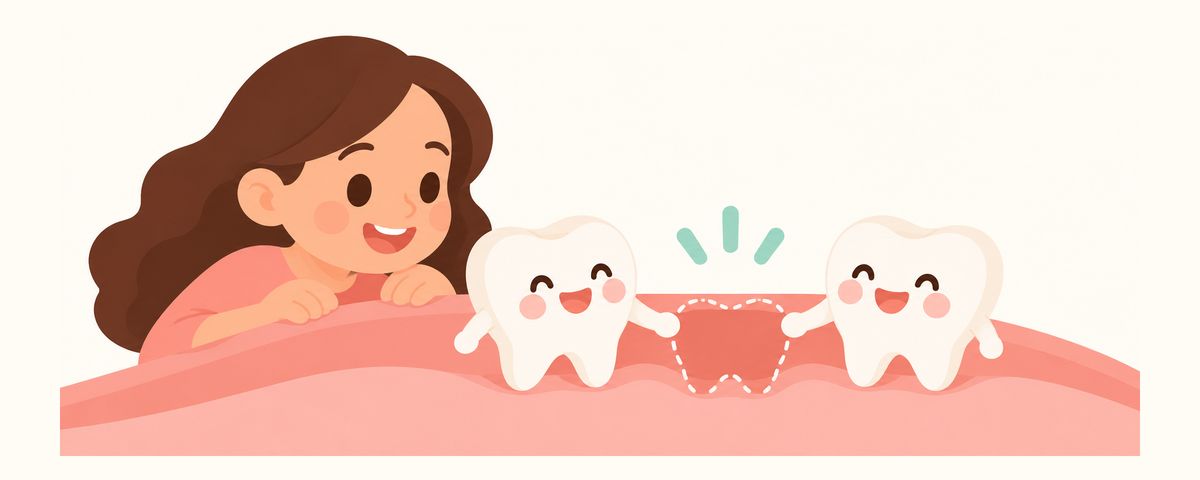
But if a baby molar is pulled or lost early because of decay, problems can follow. Teeth tend to tilt or drift little by little toward an empty space. When the teeth on either side lean into the gap, the space shrinks. Later, when the permanent tooth comes up, there isn't enough room. It may come in at an odd angle or not come in on time.
A space maintainer prevents this. It's a small appliance that holds the space so the teeth on either side don't tilt in. It's a bit like putting your bag on the seat next to you to save it until a friend arrives. But not every child who loses a tooth early needs one. It depends on which tooth was lost, how old your child is, and how far along the permanent tooth underneath is. So the dentist checks the permanent tooth on an X-ray and decides.
A baby tooth that loosened and fell out on its own means the permanent tooth is about to come in, so it usually doesn't need a space maintainer.
Treat first, pull last
The best way to protect the space is to keep the baby molar until its natural time. If a baby molar gets a cavity, treating and keeping it comes before pulling it. Putting off treatment because "it'll fall out soon" can let the cavity get deeper, until the tooth has to come out early after all.
If a baby molar has already been removed early, here's what to do:
- Ask the dentist right then, at that visit, whether a space maintainer is needed.
- If it is, don't wait too long to get it. The neighboring teeth can shift while you wait.
- Don't skip regular checkups once it's in. At each checkup, the dentist checks how the permanent tooth is coming along.
Tips for living with a space maintainer:
- Food gets trapped around the appliance easily, so brush that area extra carefully.
- Avoid sticky candy, caramel, and chewing ice. They can loosen or bend the appliance.
- Remind your child not to keep poking at it with the tongue or fingers.
- When you check their brushing, take a look in the mouth to make sure the appliance is still firmly in place.
On the side with the appliance, move the brush in small strokes and clean between the appliance and the tooth, then between the appliance and the gum. Even if your child brushes on their own, the area around the appliance is easy to miss, so do a final check now and then.
A space maintainer is removed once the permanent tooth comes through. The dentist decides when to take it out by checking the permanent tooth's progress at regular checkups, so keep up with them.
Frequently asked questions
Do baby molars that will fall out anyway really need treatment?
Baby molars handle both chewing and saving a spot for the permanent teeth until ages 9 to 12. If a cavity is left alone, it can hurt or force the tooth out early, so treating and keeping it comes first. The type of treatment depends on the cavity, so talk with the dentist.
My child had a tooth pulled, but no one mentioned a space maintainer.
Ask at the next visit, or call right away, whether one is needed. Depending on where the tooth was lost, your child's age, and how the permanent tooth is developing, one may not be needed, so it's best to hear the dentist's view.
How long does a space maintainer stay in?
It stays in until the permanent tooth comes up from underneath. The timing varies from child to child, so the dentist removes it after confirming at a regular checkup that the permanent tooth is coming in.
Is a space maintainer painful or uncomfortable?
For the first few days it may catch on the tongue or feel strange, but most kids get used to it quickly. If it pokes the gums or the pain doesn't go away, let the dentist know.
When to see the dentist
- The space maintainer comes loose or falls out (go right away)
- You see a cavity on a baby molar, or your child avoids chewing on that side
- The permanent tooth takes a long time to appear after a baby tooth is lost
- The teeth next to the gap look like they're tilting
- The gums around the appliance are swollen or sore
English ebook · Dentist Ingyoon An
A guide to the decisions behind dental care
Tooth Calendar follows dental care from pregnancy to eighteen in 78 chapters. Explore the reasons behind feeding, brushing, baby-tooth decay, sedation, and injury decisions—including what can be watched and when to seek help. Age-based contents and a topic index help you find the concern you have today.
Get these at the right time
Enter your child's birth date (or due date) in the Tooth Calendar app and these articles arrive as reminders when they matter. Free, no sign-up.
Sources
The information in this article is for general educational purposes and does not replace professional dental care. Talk to a dentist about your child's condition.