 Tooth Calendar Blog
Age 8 and New Upper Front Teeth: Big, Yellowish Teeth and Testing Solo Brushing
Between 7 and 9, the four upper front teeth change to permanent teeth. Why big, yellow, bumpy new teeth are normal, and how to test your child's solo brushing.
At a glance
- Big, yellowish, bumpy-edged new front teeth are normal
- Your child brushes first, then you check the gumline
- Can they tie their shoelaces? Try solo brushing
When new teeth come in where the front teeth fell out, it's exciting. But many parents are also surprised. "Why are they so big?" "Why are they so yellow?" This is also a great time to test whether your child can brush on their own. Here are answers to common questions as the upper front teeth change over.
When do the new front teeth come in, and what do they look like?
The two upper central incisors usually change over at 7 to 8, and the two beside them at 8 to 9. Some kids are a bit earlier or later, and it's common for the left and right sides to be a few months apart.
Most of what parents worry about with new front teeth is normal:
- Size: Permanent front teeth are meant to last into adulthood, so they're bigger than baby teeth. They look extra large in a still-small face next to baby teeth, but they fit better as the face grows.
- Color: Baby teeth naturally look whiter. Next to them, permanent teeth look a little more yellow by comparison. Once all the baby teeth are gone, the difference is less noticeable.
- Bumpy edges: The edges of new front teeth have a wavy, saw-like shape. They wear smooth little by little with chewing.
- A gap in the middle: A space between the two front teeth is common. It usually closes on its own once the canines come in.
But if just one new front tooth is a noticeably different color, have the dentist take a look.
At this age, a permanent tooth sometimes peeks out behind a baby tooth while the baby tooth is still loose. Usually the baby tooth falls out soon, and the tongue pushes the new tooth forward into place. But if the baby tooth stays firmly in place while the permanent tooth keeps coming in behind it, it's best to have the dentist check. The same goes if a long time passes after a baby tooth falls out with no new tooth in sight.
Here's how to test solo brushing
If you've been finishing your child's brushing until now, it's time to check whether they can manage on their own. The test is hand skills, not age. If your child is handy enough to tie their own shoelaces, it's worth a try.
- Let your child brush on their own for 2 minutes first.
- Then you check. Look especially at the gumline where teeth meet gums, the back molars, and the back of the new front teeth.
- Disclosing tablets (which color the spots that weren't brushed well) let your child see exactly what they missed. That works better than nagging.
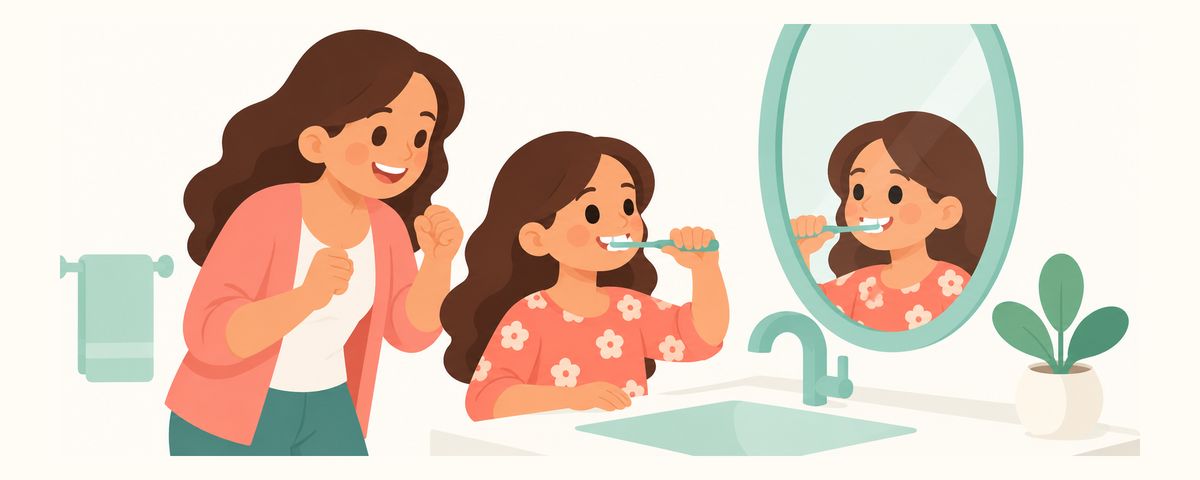
- Check together in the mirror, and have your child go back over the spots they missed.
Judge by results, not minutes. If plaque is still left along the gumline after a full 2 minutes, your child still needs help. Keep finishing their brushing until they do a clean job consistently, many times over.
A common mistake is stepping back all at once because "now they're in school." Solo brushing isn't handed over overnight. It's handed over slowly, through a stage where your child goes first and you check. On days they do a good job, praise them for something specific.
The most important time to check carefully is before bed. During sleep, saliva drops and can't rinse the mouth as well. It's fine to start by letting your child handle mornings while you still check the evening brushing together. The back of the new front teeth and the spaces between the remaining baby molars are hard for a brush to reach, so look at them together in the mirror.
Frequently asked questions
The new front teeth are really yellow. Can we whiten them?
While baby and permanent teeth are mixed, permanent teeth naturally look more yellow. Cosmetic whitening of all the teeth isn't recommended at this age. If the color worries you, have the dentist check instead of whitening. A single tooth that changed color after an injury is different, and you can talk with the dentist about treating it.
There's a gap between the front teeth. Will my child need braces?
A gap between the central incisors is common at this age and usually closes once the canines come in. But if the gap is unusually large or you're worried, ask at a regular checkup.
The edges of the new front teeth are bumpy, like a saw.
That's the normal shape of newly erupted front teeth. They wear smooth little by little with chewing, so there's no need to file them down or do anything.
My child insists on brushing alone.
Wanting to do it themselves is a good sign. Try agreeing that your child brushes first and you only do a final check. Looking at the results together with disclosing tablets makes it easier for kids to accept the check.
Have the dentist take a look when
- No permanent tooth more than 6 months after the baby tooth fell out
- A permanent tooth is coming in behind a baby tooth that's still in place
- One new front tooth is a noticeably different color
- Pain or swollen gums keep happening as a new front tooth comes in

English ebook · Dentist Ingyoon An
A guide to the decisions behind dental care
Tooth Calendar follows dental care from pregnancy to eighteen in 78 chapters. Explore the reasons behind feeding, brushing, baby-tooth decay, sedation, and injury decisions—including what can be watched and when to seek help. Age-based contents and a topic index help you find the concern you have today.
Get these at the right time
Enter your child's birth date (or due date) in the Tooth Calendar app and these articles arrive as reminders when they matter. Free, no sign-up.
Sources
- ADA · Eruption Charts (2024)
- ADA · Brushing Your Teeth (MouthHealthy) (2024)
The information in this article is for general educational purposes and does not replace professional dental care. Talk to a dentist about your child's condition.