 Tooth Calendar Blog
Second Molars, the Last Baby Teeth: Timing and Brushing All the Way Back
Second molars usually come in at 23 to 33 months, completing all 20 baby teeth. Timing, how to brush the back teeth, and signs to ask the dentist about.
At a glance
- Second molars usually arrive at 23–33 months
- These four complete all 20 baby teeth
- Reach the brush all the way to the back
After the second birthday, there may come a time when your child starts drooling again, putting hands in the mouth, and getting fussy. It can be a sign that the last baby teeth, the second molars, are coming in at the very back. Here's when they arrive, why they need extra-careful brushing, and how to get the toothbrush back there.
When the last baby teeth arrive, and what makes them special
The second molars come in at the very back, one on each side, top and bottom, so four in all. They usually come in between 23 and 33 months, most often around 30 months. The lower ones often come in a little before the upper ones, but a different order is fine too. Once these four are in, all 20 baby teeth are in place.
While they're coming in, the gums get swollen and itchy, so your child may drool, chew on things, or sleep poorly. While the tooth is only halfway through, the gum covers part of it, and food easily gets stuck in that gap.
These are the largest baby teeth, and the ones used the longest. They do the most chewing until they're replaced by permanent teeth at about age 10 to 12. But because they're at the very back, the brush has a hard time reaching them. The chewing surface has deep grooves where food gets stuck, and the bristles can't get into the sides where they touch the neighboring molars. That's why molar cavities often start around this age.
The second molars have another job too. Around age 6 to 7, the first permanent molars come in right behind them. The second molars need to stay in place so the permanent molars can come in where they belong. That's why it's worth keeping them healthy for a long time.
Brush all the way to the back like this
- Get into position. Lay your child in your lap with the head toward you, or stand behind your child and let the head rest against your body. You'll be able to see the back of the mouth.
- Have your child open wide. Making it a game, like "Open wide like a lion, ahh!", makes it easier to follow along.
- Gently pull back the cheek. Pulling the cheek outward with a finger of your other hand makes room for the brush to reach the back.
- Brush all three surfaces. Reach the brush all the way to the back, then clean the chewing surface, the cheek side, and the tongue side in turn. Brush the chewing surface back and forth, and the sides in small circles along the gum line.
- Floss between the molars. Floss once a day where the molars touch each other. A kids' floss pick with a handle makes it easy even with one hand.
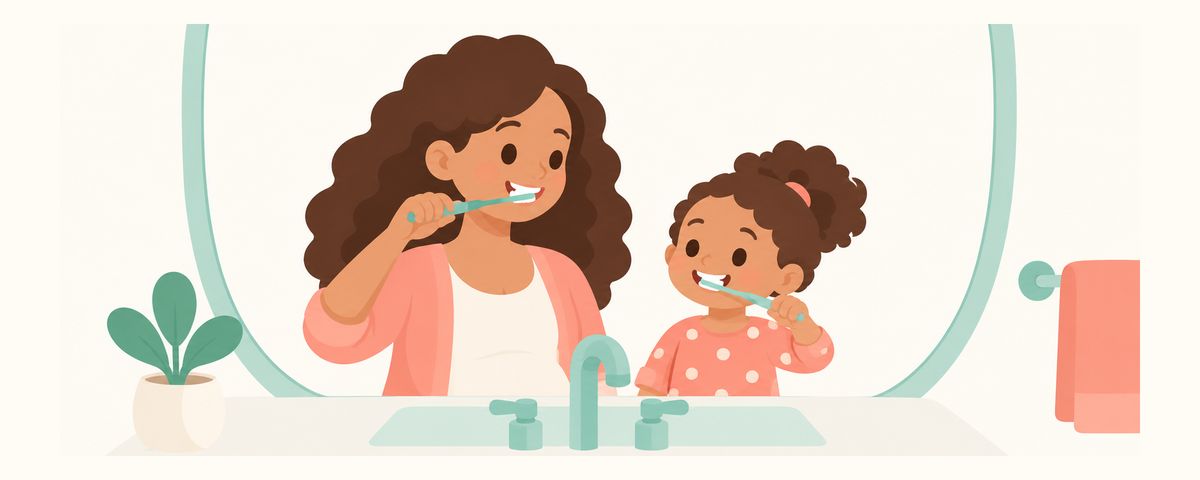
If your child doesn't like opening wide, try brushing in front of a mirror. Kids push back less when they can watch their own teeth and make a game of it, like "Found the tooth at the very back!" Rather than aiming for perfect brushing right away, aim to get the brush all the way to the back at least once every day.
Watch out for these common mistakes.
- Carefully brushing the front teeth you can see, and just poking the brush in the back once or twice.
- Giving up on the back teeth when your child clamps their mouth shut. Instead, take a short break, then start again with "One more lion!"
- Letting your child brush alone now that all the teeth are in. At this age, a parent still needs to finish the job.
When your child is fussy from teething, a clean teething ring chilled in the fridge can help. Use a rice-grain smear of fluoride toothpaste under age 3, and a pea-sized amount from the third birthday.
Frequently asked questions
My child is past 30 months, and I still don't see the second molars.
23 to 33 months is a rough range, and every child is different. If they still haven't appeared after the third birthday, ask at the checkup.
Since the molars started coming in, my child has a fever and isn't eating well.
Fussiness, drooling, or eating less is common when teeth come in. But if there's a high fever or ongoing diarrhea, don't assume it's teething. See your pediatrician.
Do we really need to floss at this age?
A toothbrush can't reach where the molars touch, so cavities can hide there. Floss once a day, along with bedtime brushing.
The new molar is a different color from the other teeth.
If a new molar's chewing surface looks rough or a different color, show it at the checkup. It's hard to tell the cause at home.
When to see a dentist
- The second molars still haven't appeared after the third birthday
- A new molar's chewing surface looks rough or discolored
- You see brown or black spots on the chewing surfaces of the molars or between them
- Your child chews only on one side or seems to hurt near the molars
- A regular checkup is due (cavities on the back molars are hard to spot at home)
English ebook · Dentist Ingyoon An
A guide to the decisions behind dental care
Tooth Calendar follows dental care from pregnancy to eighteen in 78 chapters. Explore the reasons behind feeding, brushing, baby-tooth decay, sedation, and injury decisions—including what can be watched and when to seek help. Age-based contents and a topic index help you find the concern you have today.
Get these at the right time
Enter your child's birth date (or due date) in the Tooth Calendar app and these articles arrive as reminders when they matter. Free, no sign-up.
Sources
- ADA · Eruption Charts (2024)
The information in this article is for general educational purposes and does not replace professional dental care. Talk to a dentist about your child's condition.